Written by Caitlin Paul, OTR/L, Managing Consultant at Humanscale Consulting
For today's children and teenagers, screens are woven into almost every aspect of daily life. Learning, socialising, entertainment and hobbies increasingly happen through laptops, tablets and smartphones. Rather than asking how to eliminate technology from young people's lives, a more practical question is:
How can we help growing bodies use technology safely?
Youth ergonomics helps support developing muscles, joints, and bones during childhood and adolescence. It is about protecting developing muscles, joints and bones during one of the most important stages of musculoskeletal growth. According to the Journal of Adolescent Health, improper ergonomics during childhood can increase the risk of chronic musculoskeletal problems in adulthood by 70%. By teaching healthy movement and posture early, parents, educators and caregivers can help prevent discomfort today while reducing the likelihood of long-term musculoskeletal issues later in life.
The goal is not to discourage technology use, but to ensure children develop healthy habits that allow them to use digital devices comfortably and safely for years to come.
Why Early Posture Habits Matter
Many people assume posture only becomes important during the teenage years, but poor movement patterns often begin much earlier.
Childhood is when the spine, muscles and movement habits are still developing. Repeated postures adopted during these years can become lifelong habits, making early education particularly valuable.
Technology use during infancy and toddlerhood should be limited wherever possible. Excessive screen exposure at this stage may affect cognitive development, visual development, neck posture and even fine motor skills.
The next critical stage begins around ages 6 to 7, when children typically transition from active, movement-based learning environments into classrooms where they spend longer periods sitting while using laptops and tablets. This is often when early signs of slouching, forward-head posture and prolonged sitting first appear.
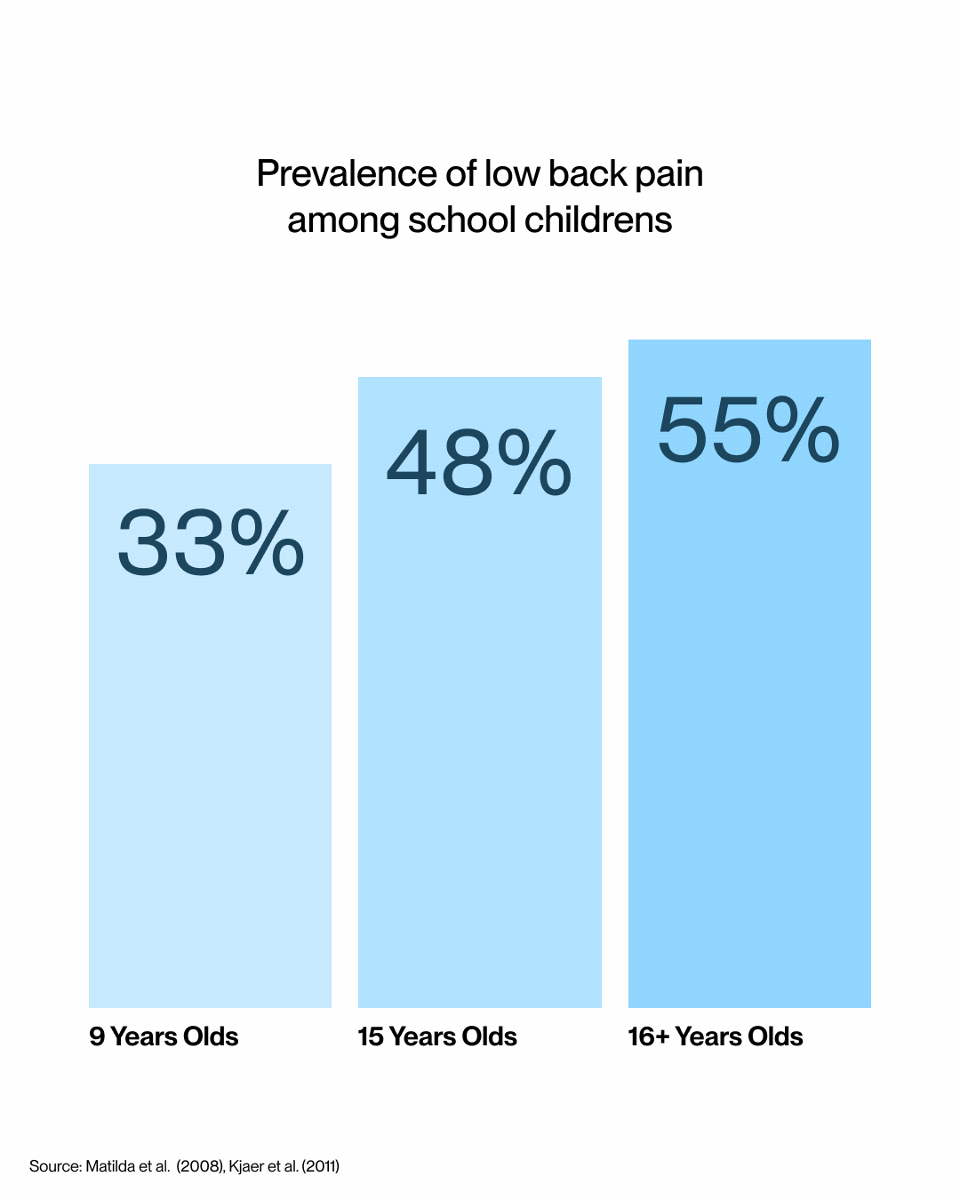
By ages 10 to 12, homework becomes more demanding, screen time increases and many children begin using smartphones and gaming systems independently. If poor posture becomes the norm during this period, it can influence spinal development and muscle balance as children continue to grow.
By the teenage years (13 to 17), these movement patterns are often deeply ingrained. Neck pain, headaches, upper-back tightness and lower-back discomfort become increasingly common, yet many teenagers simply accept them as part of everyday life.
How Technology Affects Growing Bodies
As children spend more time using digital devices, their bodies adapt to the positions they use most often. When that position is consistently slouched with the head leaning forward, the spine, muscles and connective tissues gradually adapt to those postures. Over time, this may contribute to chronic discomfort, reduced mobility and changes in spinal alignment.
Teenagers are particularly susceptible because they frequently switch between homework, gaming, messaging and social media throughout the day. Each activity places different demands on the neck, shoulders and back, often resulting in inconsistent loading and cumulative strain.
.jpg)
Many young people experience:
- neck pain
- upper-back tightness
- lower-back discomfort
- wrist strain
- thumb pain
- eye fatigue
These symptoms are often dismissed as "normal", but they are early warning signs that the body is working harder than it should. Fortunately, these issues are highly preventable through improved awareness, better workstation design and healthier daily habits.
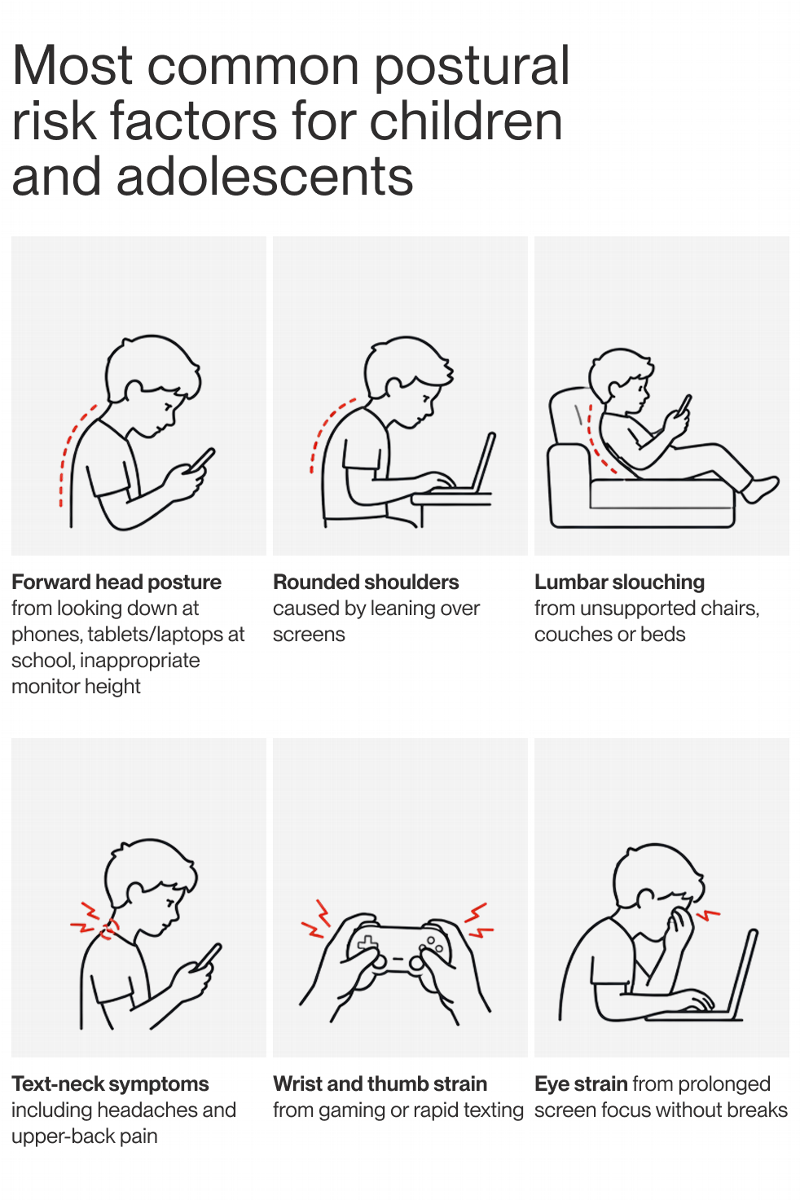
Most Common Postural Risk Factors for Children and Adolescents
- Forward head posture from looking down at phones, tablets/laptops at school, inappropriate monitor height
- Rounded shoulders caused by leaning over screens
- Lumbar slouching from unsupported chairs, couches or beds
- Text-neck symptoms including headaches and upper-back pain
- Wrist and thumb strain from gaming or rapid texting
- Eye strain from prolonged screen focus without breaks
Creating an Ergonomic Environment
Whether children are studying, gaming or using technology recreationally, creating a supportive environment makes a significant difference. A well-designed workspace naturally encourages better posture without requiring children to think about it constantly. Even relatively small adjustments can substantially reduce physical strain while improving comfort and concentration.
Ergonomic Guidelines for Children and Adolescent Tech Use
- Screen height: Keep the top of the screen at or slightly below eye level; hold phones at chest height. Consider one of our world-leading M/Class Monitor Arms to hold screens or the L6 Laptop Holder to position laptops at an appropriate viewing height.
- Chair and posture support: encourage children to sit back in the chair with their thighs parallel to the floor and feet flat on the floor or supported by a footrest like the FR500 foot rocker which provides dynamic foot support and promotes gentle movement. Consider the Diffrient World Chair, which provides responsive ergonomic support for a wide range of users.
- Keyboard and mouse: Position the keyboard and mouse so elbows remain close to the body with wrists in a neutral position. Ensure the work surface height allows relaxed shoulders.
- Break schedule: Follow the 20-20-20 rule by looking 20 feet away for 20 seconds every 20 minutes. Encourage children to stand, stretch or move every 30 to 45 minutes.
- Lighting: Minimise screen glare and use warmer lighting during the evening to reduce visual fatigue. Our Nova light is ideal for study, remote learning and looking great on video calls.
Don't Forget Gaming Ergonomics
Gaming deserves particular attention. Long gaming sessions can increase neck, shoulder, wrist, and back strain when children sit in unsupported positions.
Encouraging gamers to keep controllers or keyboards close to their bodies and position screens at or slightly below eye level helps reduce unnecessary neck flexion. Interestingly, framing good posture as a way to improve gaming performance often resonates more effectively than discussing health alone. Research shows that better posture and taking regular breaks from sitting prevents reductions in brain blood flow and can improve comfort, endurance and concentration during longer gaming sessions.
Healthy Technology Habits Go Beyond Furniture
An ergonomic setup is only one part of the solution. Healthy technology habits should also include:
- regular movement breaks
- device-free zones within the home
- posture reminder apps
- balanced screen time
- adults modelling healthy technology behaviours themselves
Children learn by observing the people around them. Parents, teachers and caregivers who demonstrate good posture, take regular movement breaks and healthy screen habits reinforce these behaviours far more effectively than rules alone.
Building Healthy Habits for Life
Children and teenagers are growing up in a world where technology is unavoidable. Fortunately, discomfort does not have to be. Teaching ergonomics early provides something incredibly valuable: body awareness during the years when lifelong habits are being established.
As children learn to recognise postural risks such as forward-head posture, rounded shoulders and slouching, they begin to understand how their everyday choices influence how their bodies feel and function. Because the spine, muscles and movement patterns continue developing throughout childhood and adolescence, this represents a unique opportunity to establish healthy habits that will last into adulthood.
Learning how good posture feels—not simply what it looks like—helps young people carry those habits into later life. The result is more than just reduced neck and back pain. It can improve confidence, movement quality and overall wellbeing while creating the foundation for a lifetime of healthier technology use.
With thoughtful ergonomics, supportive workspaces and positive daily habits, children can enjoy the benefits of technology comfortably, safely and confidently, both today and in the future.
References:
Journal of Adolescent Health
Frontiers for the Young Mind - Taking Regular Breaks from Sitting Prevents Reductions in Brain Blood Flow
About the Author
Caitlin Paul is a Managing Consultant at Humanscale Consulting and a certified ergonomist with a Master of Science in Occupational Therapy from D’Youville University. With 11 years of experience as an Occupational Therapist across school, home, and healthcare environments, Caitlin brings a clinical perspective to workplace ergonomics. She is also a Certified Ergonomic Assessment Specialist and Certified Office Ergonomics Evaluator, with expertise in safe patient handling, injury prevention, and ergonomic program implementation.