The workplace has changed considerably. Hybrid working has extended it beyond the traditional office, expectations around employee well-being have evolved, and organizations are under growing pressure to demonstrate the value of their people investments.
The role of ergonomics is changing too.
For decades, workplace ergonomics has often been approached primarily through the lens of injury prevention, compliance or accommodation. These remain important, but they represent only part of the picture. A well-designed ergonomics strategy can also influence employee experience, productivity, absenteeism, retention and an organization’s ability to support people consistently wherever they work.
Our new whitepaper from Jonathan Puleio, CPE, Global Vice President of Humanscale Consulting, Ergonomics as a Strategic HR Investment: Optimizing People Potential and Organizational ROI, examines this broader business case and provides a roadmap for making ergonomics a more integral part of people strategy.
“Our latest whitepaper aims to broaden the conversation around ergonomics beyond injury reduction. HR leaders, Chief People Officers and EH&S professionals are increasingly being asked to demonstrate how investments in employee well-being contribute to wider organisational outcomes. By examining discomfort rates and postural risks alongside metrics such as absenteeism, productivity, retention and employee experience, organisations can build a much more compelling argument for the investment in workplace ergonomics and occupational health.” Jonathan Puleio, CPE, Global Vice President, Humanscale Consulting
A growing people and business challenge
An estimated 1.71 billion people globally live with musculoskeletal conditions, making them one of the leading causes of workplace limitation and disability. With aging populations and more people remaining economically active for longer, supporting musculoskeletal health is likely to become an increasingly important workforce consideration.
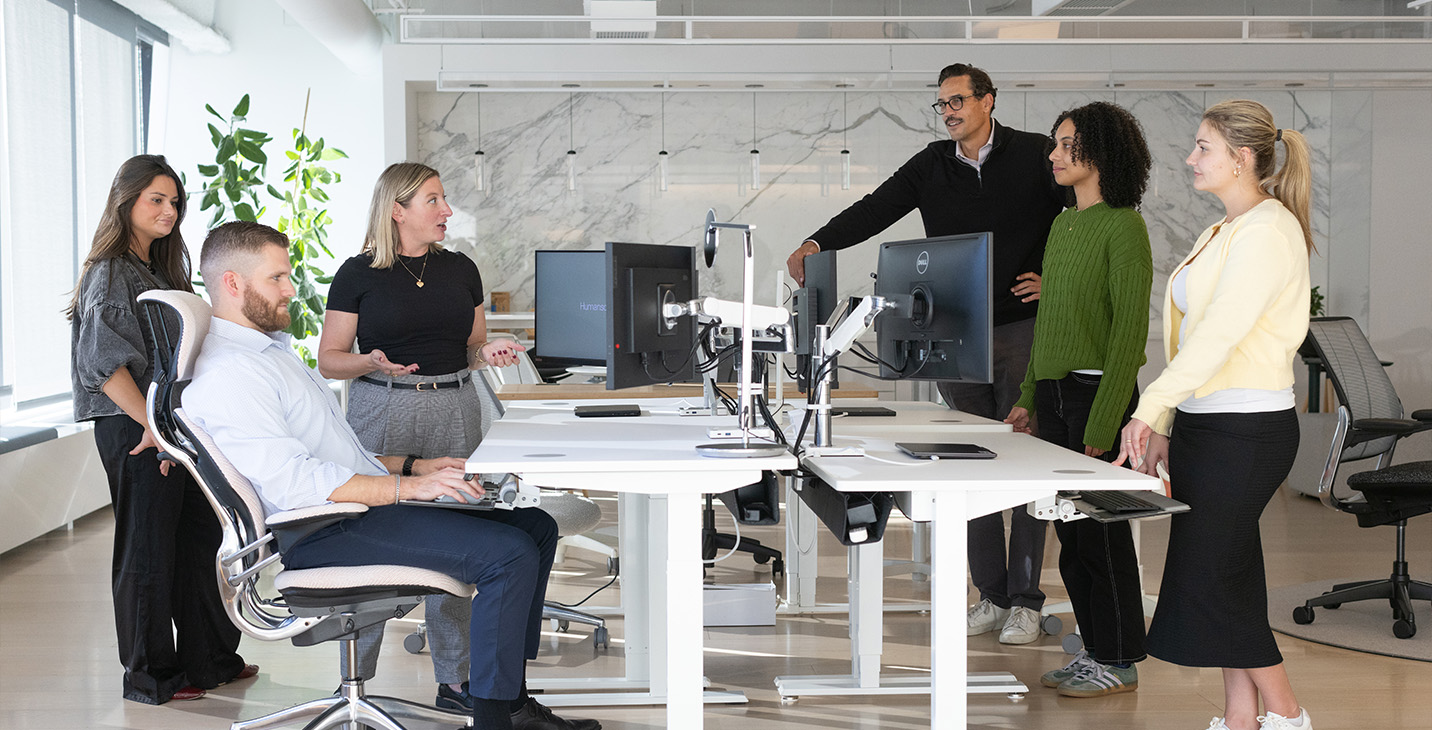
At the same time, where people work has become more complex. Employees may move between corporate offices, home workstations and shared spaces throughout the work week. Traditional models of ergonomic support therefore need to evolve to provide appropriate guidance wherever work happens.
For HR Professionals and People leaders, this changes the question. Rather than viewing ergonomics as a response to discomfort or injury, organisations should consider the ways in which ergonomics can proactively impact broader business outcomes and the physical experience of work.
From risk prevention to people performance
An employee does not need to have a reportable injury for poor ergonomics to affect the individual or the organisation. Persistent musculoskeletal discomfort can measurably reduce cognitive performance, performance, and concentration levels well before absenteeism occurs or medical treatment is required.
The whitepaper therefore encourages organisations to connect ergonomics with metrics already occupying HR leadership teams, including employee discomfort and ergonomic risk, MSD-related health claims, absenteeism, return-to-work timelines, productivity and retention.
This creates a broader view of ROI. Beyond reducing injury and healthcare costs, ergonomics can contribute to productivity by making tasks easier to perform and work environments more comfortable to occupy, while supporting employee attraction, engagement and retention.
For a CPO or CHRO building the case for well-being investment, that broader perspective matters.
Making ergonomics part of the employee experience
One of the whitepaper’s central recommendations is to move ergonomics upstream. Instead of waiting for an employee to experience pain or request an accommodation, organisations can benefit from proactively introducing ergonomics education, online self-assessments, and workstation assessment support throughout the employee lifecycle. Onboarding provides an obvious opportunity: helping employees understand how to properly configure their workstation from their first days can establish healthier behaviours before problems develop.
Ergonomics can also support more inclusive workplaces. Given that people are fare from identical, designing around an assumed “average” user overlooks significant differences in body dimensions, capabilities and individual requirements. Embedding ergonomic thinking within wellness, accessibility and inclusion strategies can help accommodate a broader workforce.
The result is a shift from reactive accommodation to proactive prevention.
Scaling ergonomics for a hybrid workforce
Digital tools are also making it possible to provide ergonomic support consistently across geographically dispersed workforces.
The whitepaper explores how cloud-based self-assessments, eLearning and practitioner tools can extend ergonomic expertise at scale. Humanscale’s ergoIQ platform, for example, includes self-assessments, learning and practitioner-level capabilities that help employees configure their work environment while giving organisations greater visibility of ergonomic risks and interventions.
Technology does not replace the ergonomist or health and safety professional – it gives them superpowers in the form of increased visibility and reach that translate into enhanced prevention of work-related injury. Technology empowers employees to resolve straightforward issues themselves while helping practitioners pinpoint risk and identify the individuals that required more specialised intervention.
Turning insight into action
A successful ergonomics program entails more than conducting workstation assessments for those who ask. It should generate insight and action.
By examining patterns in discomfort, postural risks, equipment concerns, and absence, organisations can identify where interventions are most needed. The whitepaper recommends starting with higher-exposure populations, collecting data, acting on the findings and using the results to inform a wider rollout.
This evidence can also help HR, EH&S, Facilities, Benefits, Risk and Finance speak a common language, turning ergonomics into a shared strategy connecting people, workplace wellness, workstation design, and performance.
The case for ergonomics integrity
Ultimately, the opportunity is bigger than better chairs, workstation assessments or compliance.
Ergonomics integrity asks whether the whole work experience has been designed around human capabilities and limitations. Can the environment be adjusted to fit 90-95% of the work population? Can employees work comfortably and effectively wherever they are? Are risks identified before discomfort and pain develops? And are interventions delivering measurable results?
For HR Managers and Chief People Officers, ergonomics offers an evidence-based lever for improving employee experience and protecting workforce capacity. For EH&S professionals, it creates an opportunity to connect risk prevention more directly with strategic business outcomes.
As the whitepaper concludes, organisations that embrace ergonomics integrity can not only reduce injuries and costs, but support engagement, retention and long-term organisational performance. In today’s workplace, ergonomics deserves to be viewed as a critical business strategy not simply a response to discomfort.
Download the whitepaper: Ergonomics as a Strategic HR Investment: Optimizing People Potential and Organizational ROI.
Download the whitepaper
Submit the form below to download the whitepaper: Ergonomics as a Strategic HR Investment: Optimizing People Potential and Organizational ROI.