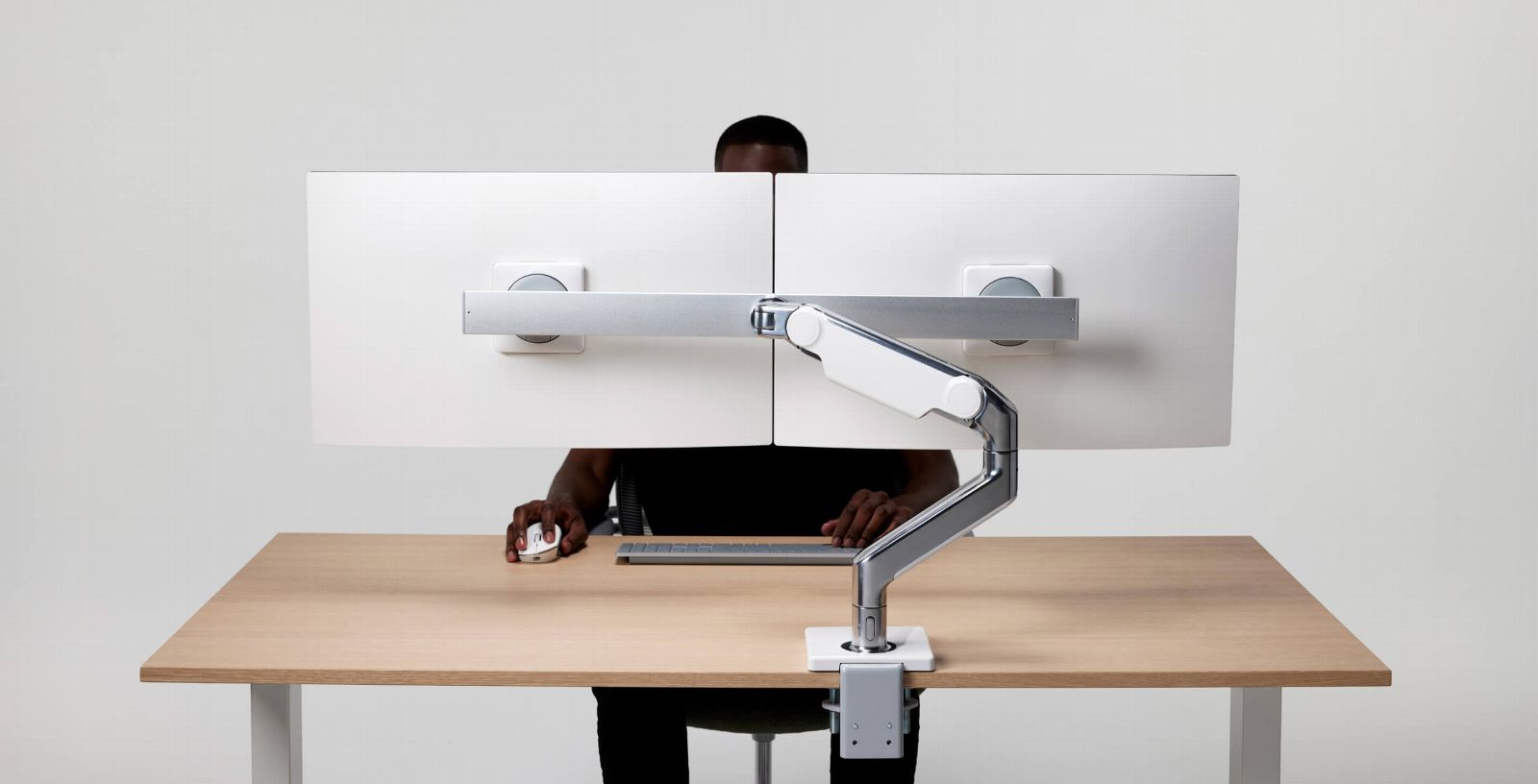
A closer look at the engineering, materials and design decisions behind Humanscale M/Class Monitor Arms.
At first glance, most monitor arms do the same thing: hold a screen above the worksurface and allow it to move up, down, forward and back. So how can you tell the difference between a regular monitor arm and a quality one?
The difference is not always obvious on day one. It becomes clearer over time—in how easily the arm installs, how smoothly it moves, how reliably it holds its position and how well its materials and mechanisms withstand years of everyday adjustment.
At Humanscale, we think of this as quiet quality: sophisticated engineering that has deliberately been designed out of the user's way, leaving a product that feels simple, intuitive and dependable. That philosophy is central to M/Class Monitor Arms and has earned them many accolades including a Red Dot Award: Product Design 2026, recognizing a design approach in which performance, versatility and simplicity work together.
Start with the User
A fundamental principle of ergonomics is that work tools should adjust to the user, rather than requiring the user to adapt to fixed equipment. Monitor height, depth and angle can influence neck posture and visual comfort, so a good monitor arm needs to make adjustment simple and intuitive as posture, task or working position changes.
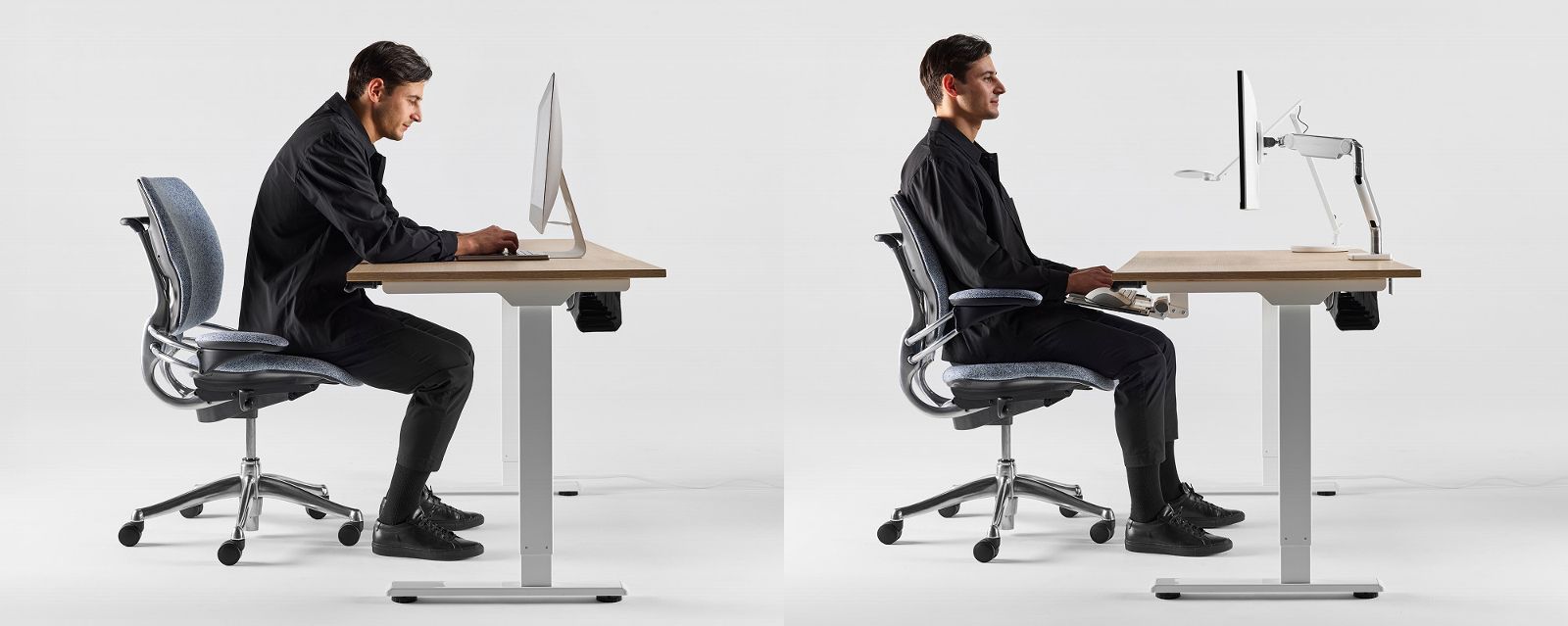
That principle underpins the M/Class range, where ease of movement is designed into everything from single and dual-monitor applications to more complex multi-screen configurations. But making something feel simple to the user often requires considerably more thought behind the scenes.
1. Quality Makes Complexity Disappear
Humanscale has always believed that good design achieves more with less. With M/Class, that means removing unnecessary steps, controls and opportunities for error wherever possible.
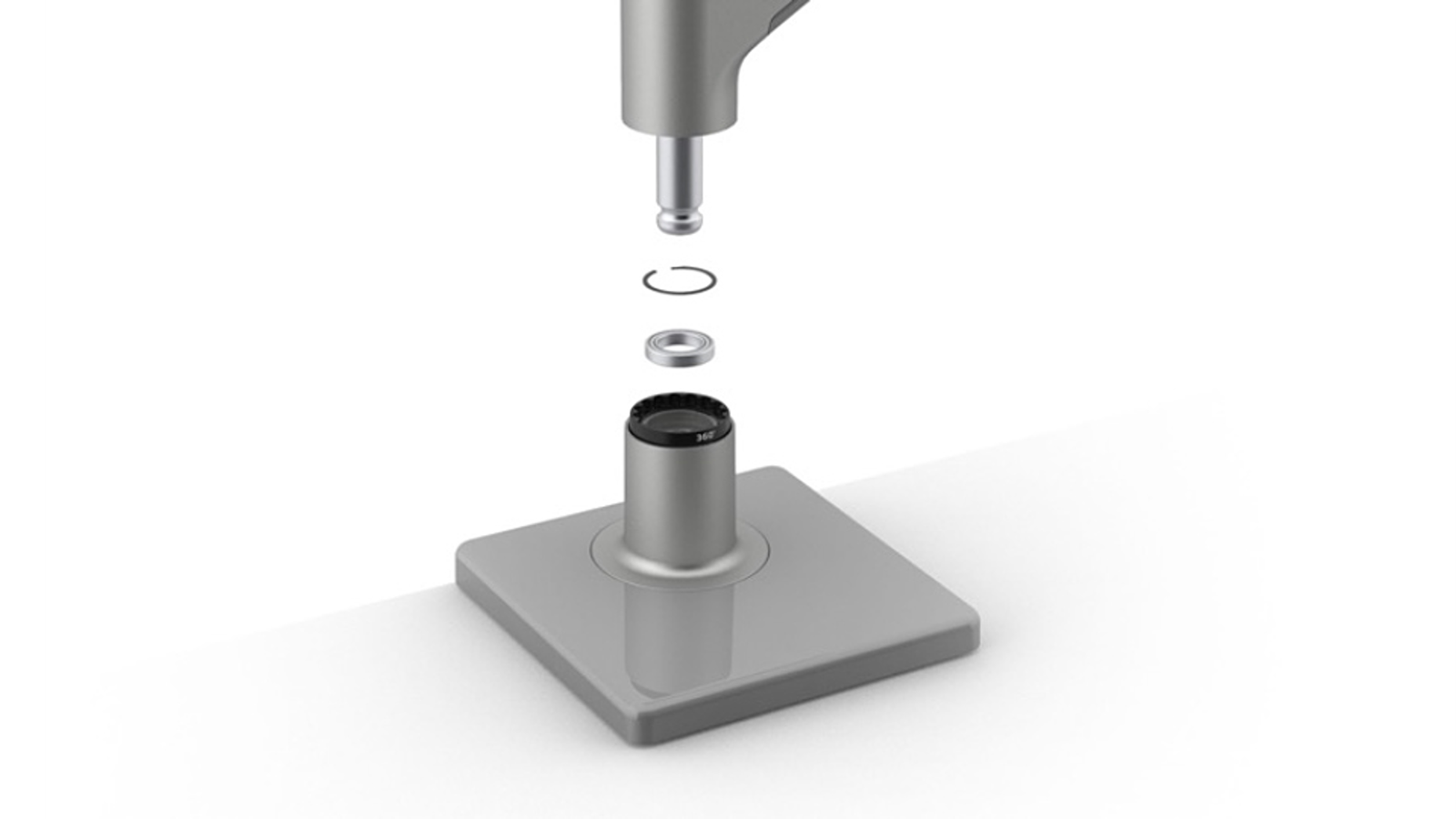
- Quick Attachment Technology allows arm components to snap securely together without tools in under 30 seconds, while Humanscale's installation testing found complete arm installation averaged approximately one minute.
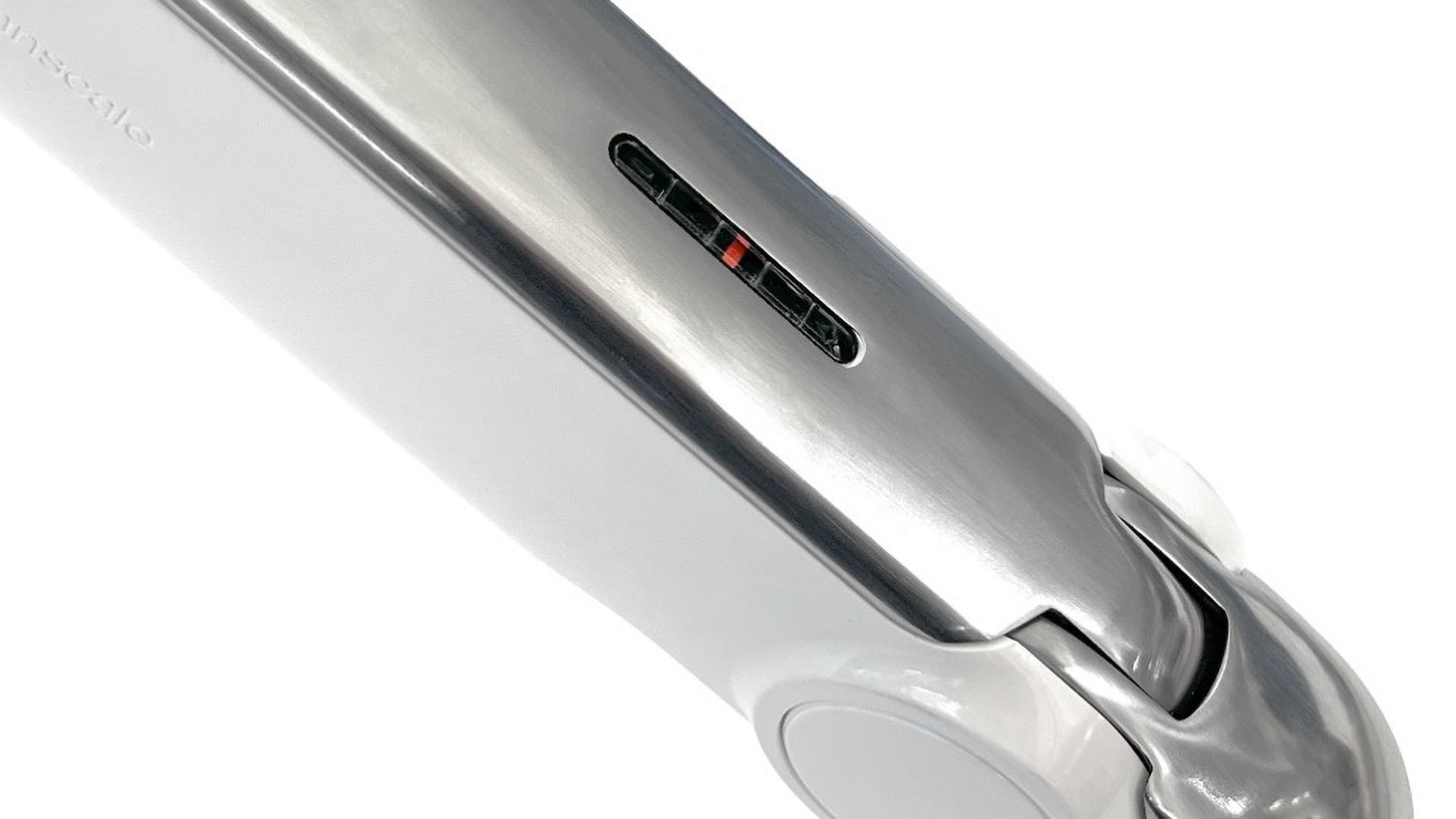
- The Counterbalance Indicator provides a clear reference for setting the correct tension for a monitor, which can then be replicated across multiple workstations—particularly valuable for Facilities and IT teams managing large installations.
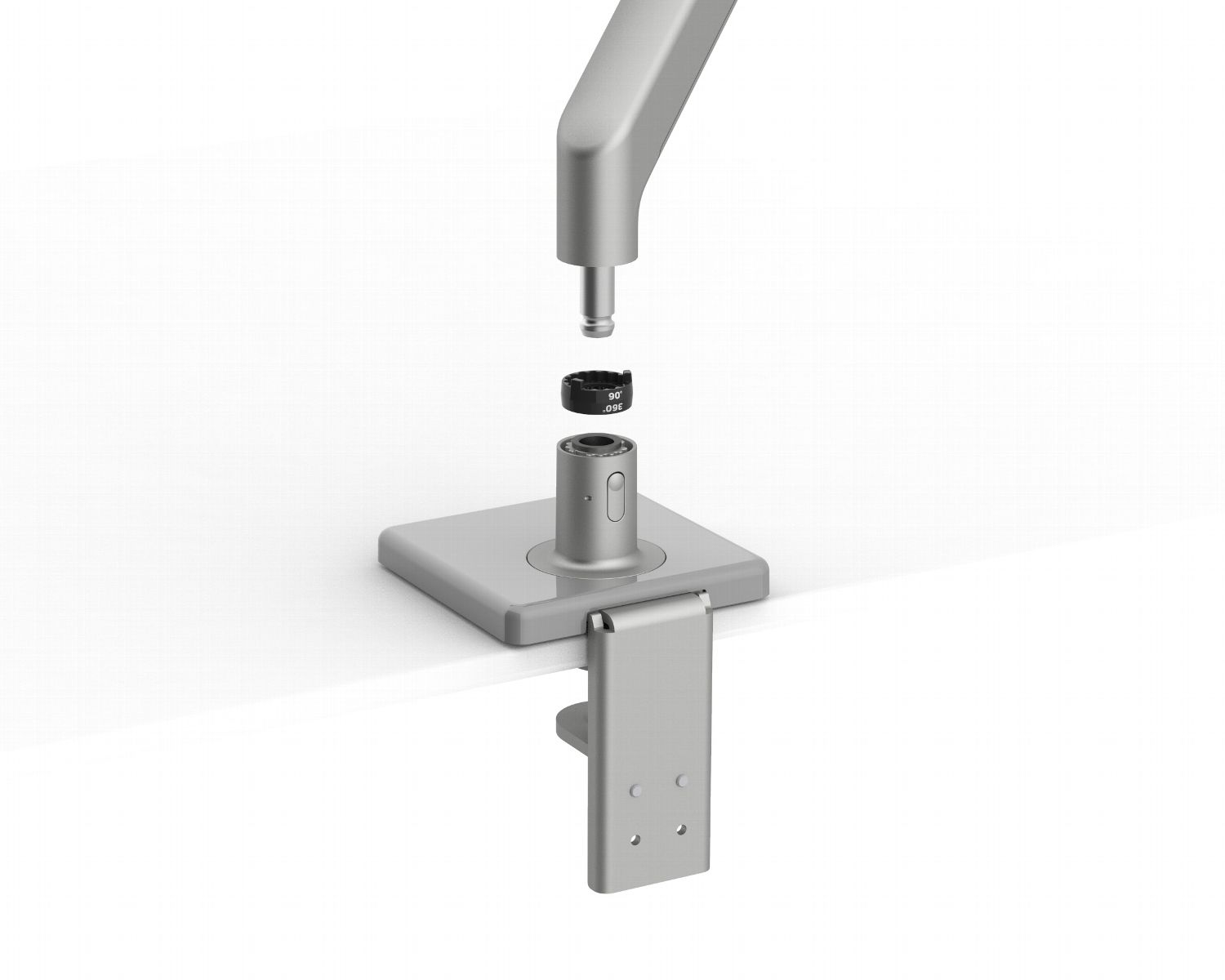
- Tamper-proof Smart Stop™ follows the same philosophy. Rotation can be configured at 90, 180 or 360 degrees to help prevent the monitor or arm from colliding with surrounding objects. Concealed inside the arm, it can be configured during installation and then effectively forgotten.
These details reflect a larger principle: if complexity does not benefit the user, design it out.
2. The Most Important Quality May Be Hidden
A monitor arm can perform perfectly well when it is new. The more revealing question is how it will feel after years of movement.
M2 Pro and M8 Pro use mechanical steel springs designed to retain consistent counterbalance force throughout their working life, with mechanisms tested and independently verified to perform beyond 20 years of use. Inside the joints, oil-impregnated bronze bushings and steel ball or roller bearings are used on key wear surfaces to reduce friction and support smooth, consistent movement over extended periods.
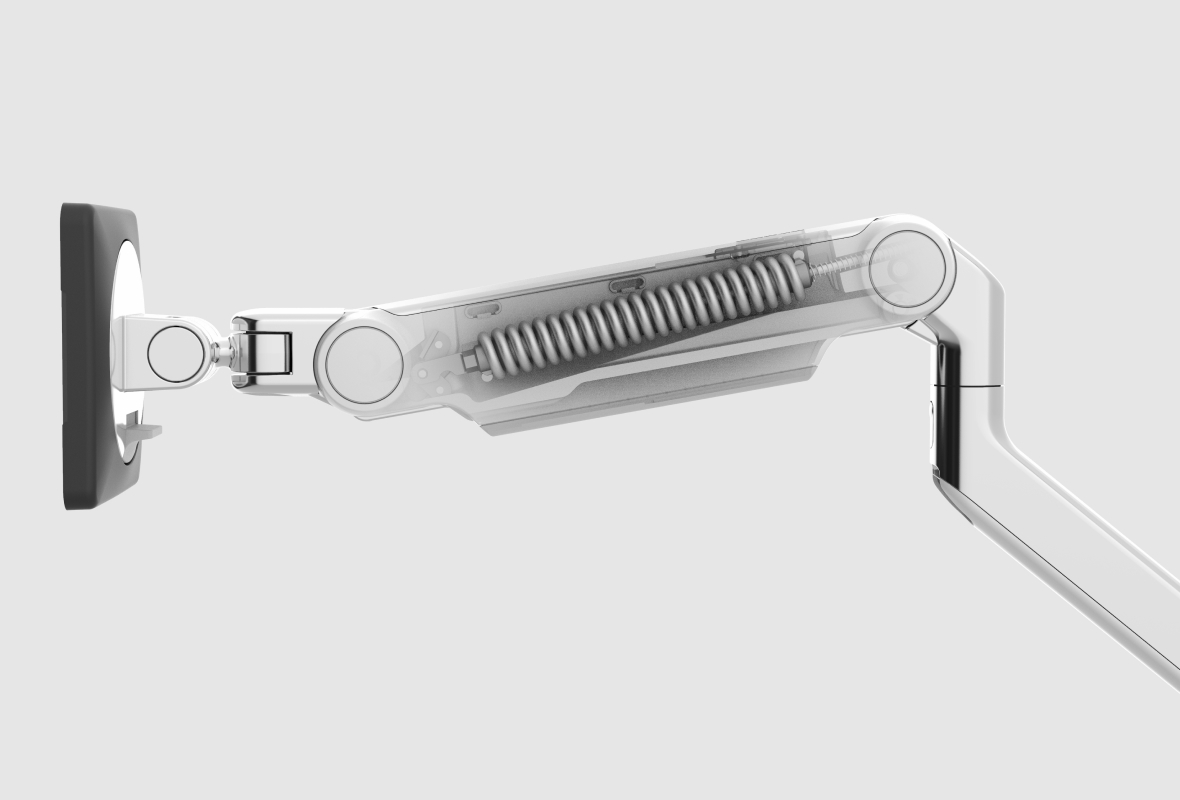
Most users will never see a spring, bearing or bushing. But they experience the result every time the monitor moves smoothly, remains stable and stays where it has been positioned.
That is quiet quality in its purest form: the engineering is invisible, but its effect is not.
3. Quality Has to Be Proven
A monitor arm is a dynamic product that may be repositioned thousands of times during its life. Assessing quality therefore requires more than seeing how it performs when it leaves the box.
Humanscale operates its own test laboratories at its manufacturing locations, where products undergo cyclic, durability and reliability testing. As part of our internal quality standards, monitor arms are load tested to three times their rated capacity.
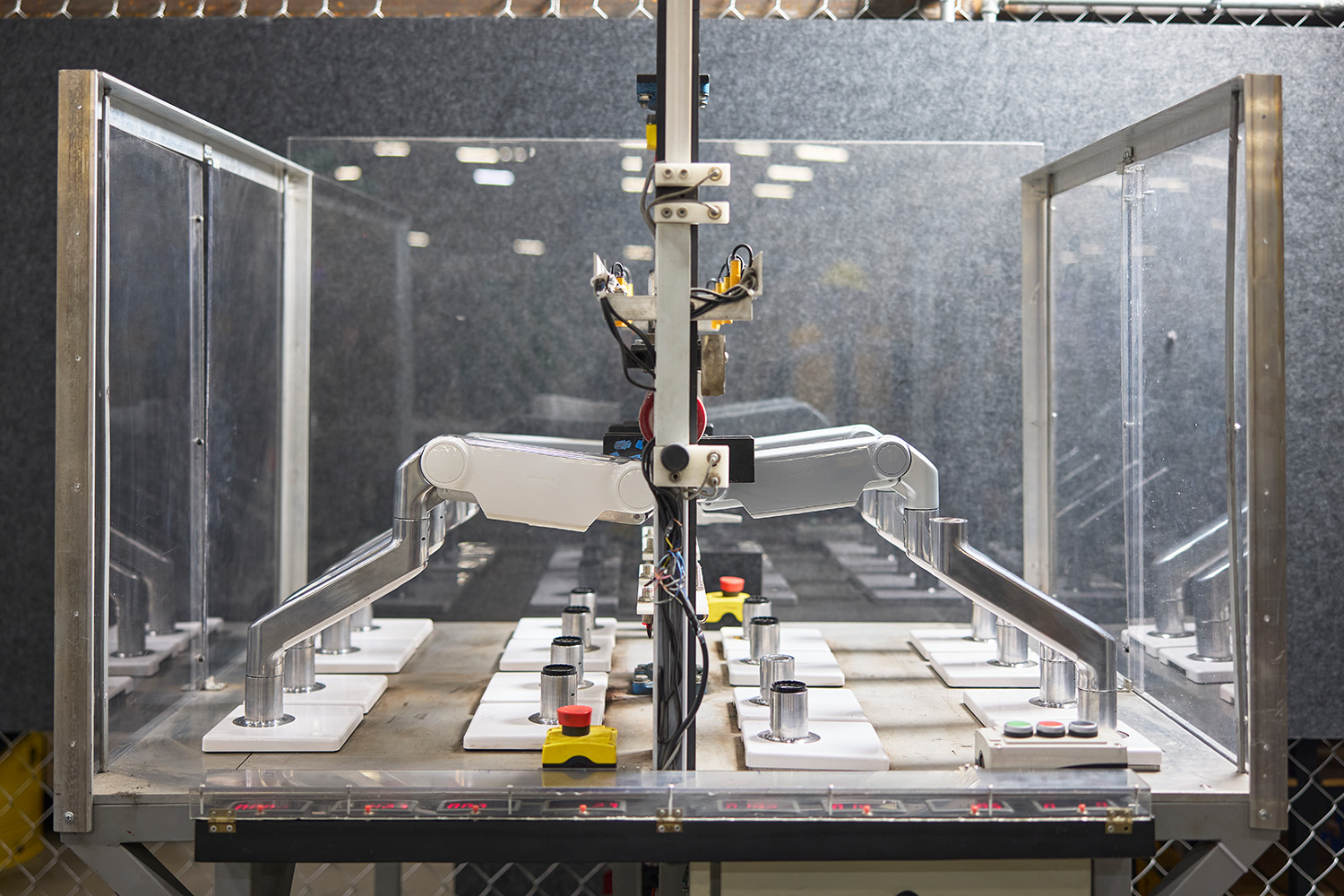
Repeated movement is tested too. In one internal vertical cycle test, M8 continued without an identified issue through the test sequence, while a separate horizontal rotation test showed some wear but no failure after thousands of cycles. These are Humanscale's own internal tests, but they demonstrate how repeated-use testing is used to understand performance beyond initial installation.
Independent standards provide another important benchmark. M2 Pro and M8.1 are BIFMA certified, providing specifiers, Facilities teams and workplace decision-makers with independent verification against recognized industry requirements for performance and safety. Humanscale also includes its certified monitor arms in the BIFMA registry, providing transparency for customers looking to verify compliance.
For Humanscale, meeting an industry standard is the starting point rather than the end goal. BIFMA certification sits alongside our own testing program, allowing engineers to continually test and understand how products perform under repeated movement, demanding loads and extended use.
4. Manufacturing Quality Matters
Long-term durability cannot be added at the end of the design process. It starts with the materials selected and how components are made.
M/Class uses high-quality aluminum alloys engineered for strength, but even strong aluminum can be weakened by porosity—tiny air pockets created during die casting that can be almost impossible to identify visually. That is why Humanscale X-rays arm components to identify potential porosity before assembly, with AI-powered analysis being introduced to make defect detection faster and more accurate.
The same attention extends to the exterior, where aluminum components use a durable powder-coated finish designed to withstand the impacts, scratches and wear of busy workplaces.
Humanscale has also brought significant manufacturing capability in-house, including aluminum die casting, injection molding, powder coating and product testing. This level of vertical integration provides closer oversight of materials, manufacturing tolerances and quality control from component production through testing and finishing.
It also supports Humanscale's sustainability goals: our die-casting operation runs on 100% renewable electricity, while water used in powder coating is sourced from collected rainwater.
The result is greater control over something fundamental to long-term quality: consistency.
5. Longevity Is Part of Sustainability
Durability and sustainability are closely connected. A product's environmental impact depends not only on the materials used to make it, but also on how long it remains useful before repair or replacement becomes necessary.
Humanscale's design philosophy connects simplicity with longevity: removing unnecessary components can reduce material use and potential points of failure, while robust construction and timeless aesthetics help products remain useful for longer. M/Class Monitor Arms are also certified Climate Positive, reflecting our wider commitment to creating measurable positive environmental outcomes.
Longevity also requires adaptability. M/Class is a family of solutions capable of supporting different screen sizes, weights and multi-monitor configurations as workplace technology evolves. Practical details including flexible cable management, built-in tools and VESA covers, make the system easier to maintain, reconfigure and integrate into the workstation throughout its life.
The Difference Shows Up Over Time
The true quality of a monitor arm is difficult to judge from a photograph or short demonstration. Many lower-cost solutions can perform the basic task of supporting and repositioning a screen when new. The difference becomes clearer after years of installation, adjustment, material wear and changing technology.
A cheaper arm may require a lower initial investment, but purchase price is only one part of its lifetime value. Installation, maintenance, reconfiguration, reliability, longevity and eventual replacement all contribute to the true cost of ownership.
M/Class Monitor Arms have been recognised with awards that recognise the considered approach to their design, but perhaps their strongest qualities are the ones users never see: mechanical steel springs, durable wear materials, X-rayed components, rigorous testing and the manufacturing expertise behind a product deliberately designed to remain simple.
That is what makes the additional investment worthwhile. M/Class is designed not simply to perform well on day one, but to deliver value over years of use.
Ultimately, that is the nature of quiet quality. You may never see the steel spring, inspect the bronze bushing, examine an X-ray or think about the testing a component has undergone. You simply experience a monitor arm that installs easily, moves smoothly, stays where you put it and continues doing its job.
You may never notice every decision that went into creating it, but you are far more likely to notice when that quality is missing.