In 2024, we became the first commercial furniture manufacturer to eliminate added antimicrobial chemicals from the products we make. In this article, we’ll take a look at the dangers of this Red List chemical, and why they aren’t even necessary to achieve peak performance and hygiene benefits.
Antimicrobial treatments have surged in popularity over the past few decades, touted as a way to prevent the spread of germs on surfaces ranging from hospital equipment to personal electronics. In the furniture industry, manufacturers have often adopted these treatments—usually applied to any high-touch surfaces, like upholstery or surface coatings, especially in public settings—without deep scrutiny. Although antimicrobials can offer some benefit in high-exposure environments, the long-term health implications and effectiveness of these additives remain under debate. Recent studies suggest that certain antimicrobials could be unnecessary and provide a false sense of security-- or are even detrimental, raising questions about best practices for healthier product design.
Uncertain Efficacy and Industry Debate
Though antimicrobials might look good in marketing materials, several questions persist:
- Do they actually prevent the spread of disease?
Antimicrobial treatments are often marketed for their ability to reduce odors and slow the spread of disease. While they can limit microbial presence in controlled lab settings, real-world conditions tell a different story. Everyday factors like dirt, body oils, and wear-and-tear can diminish their effectiveness over time. In many cases, routine cleaning does just as much—if not more—to maintain hygiene without relying on added chemicals.
- Are acute issues overshadowing long-term risks?
While antimicrobial surfaces may have been introduced to reduce immediate pathogen transfer in hospitals, many healthcare systems—like Kaiser Permanente—are now moving away from this practice. The reason? The long-term risks and questionable efficacy in real-world settings. In non-medical environments like offices, public lobbies, and schools, there’s little evidence that antimicrobials provide a meaningful advantage over regular cleaning and maintenance. Instead, they may contribute to unnecessary chemical exposure without delivering significant health benefits.
- Could antimicrobial resistance develop?
As with antibiotics in medicine, overuse of antimicrobials raises concerns about creating “superbugs,” microorganisms that adapt and become resistant to these chemicals. This risk, while more studied in medical contexts, also applies to widespread antimicrobial use in consumer goods. While antimicrobial furniture might not be the single biggest driver of resistance, it can contribute to a broader landscape in which microbes adapt to chemical challenges.
Moreover, certain antimicrobials can pose direct health risks. Prolonged exposure to quaternary ammonium compounds, for instance, has been associated with skin irritation and possible respiratory effects. Zinc-based additives, including zinc pyrithione, face growing scrutiny for potential environmental toxicity. Yet, many of these chemicals continue to be integrated into furniture and textiles with minimal labeling or end-user awareness.
- Is the added chemical load on people and the environment worth it?
Furniture, coatings, and textiles that feature antimicrobials often introduce additional chemicals into our ecosystems. There’s growing caution around how these substances might accumulate in water sources and wildlife, as well as how they might affect the health of those who come into contact with them daily.
Because of these factors, many in the contract furniture industry are still uncertain about the true value of antimicrobial treatments versus their potential harms.
Why Antimicrobials Do More Harm Than Good
While antimicrobials are designed to inhibit bacteria, their unintended consequences can outweigh their benefits—sometimes harming the very ecosystems and organisms we rely on.
Many antimicrobial chemicals, such as triclosan and silver nanoparticles, don’t just disappear after use. They persist in water and soil, eventually transferring into our food and accumulating in our bodies. Studies have linked triclosan, once widely used in consumer goods, to endocrine disruption and increased allergen sensitivity. High exposure to certain antimicrobials, such as quaternary ammonium compounds (QACs), has also been associated with respiratory issues, blood disorders, and gastrointestinal problems.
Beyond human health, these chemicals pose a serious threat to the environment. Zinc pyrithione, for example, is toxic to marine plants and animals, disrupting aquatic ecosystems by harming algae, fish, and other organisms essential to the food chain. Meanwhile, overuse of antimicrobials contributes to the growing problem of antimicrobial resistance, where bacteria evolve to withstand treatment, leading to the rise of superbugs.
Despite their widespread presence in textiles, coatings, and everyday surfaces, there is no proven evidence that antimicrobials provide meaningful health benefits outside of clinical settings. Instead, they introduce unnecessary risks—both to human well-being and to the environment—making their continued use in furniture and consumer products increasingly difficult to justify.
Humanscale’s Decision to Remove Antimicrobials
Recognizing that safe design and thoughtful material choice are essential, Humanscale took a decisive step: as of January 2025, we removed all substances classified as antimicrobials, the last instance being zinc pyrithione from our standard polyurethane upholstery offering. This additive was originally included, often by default, in the outermost layer of polyurethane upholstery. Once Humanscale began investigating its real-world impact, the company discovered two key findings:
1. No Actual Need for Zinc-Based Additives
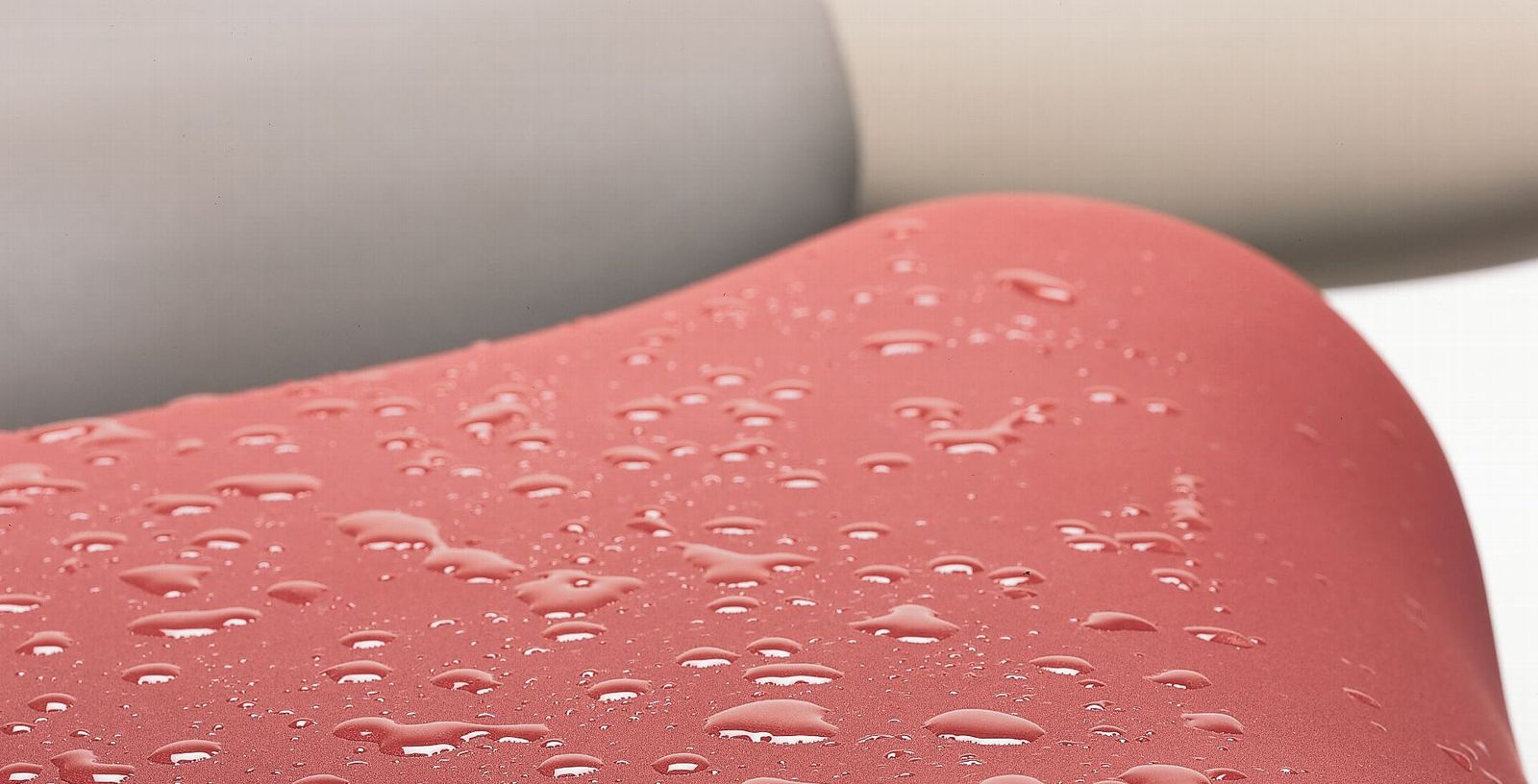
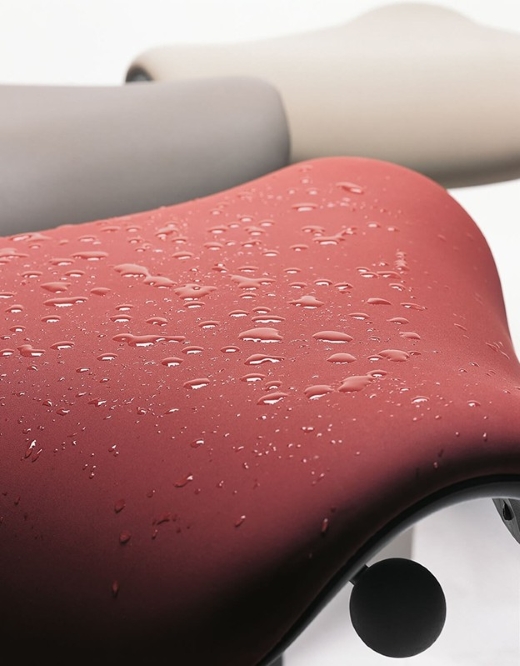
Our antimicrobial textile features an advanced nano-texture designed to repel moisture, creating an inhospitable environment for microbial growth. This hydrophobic surface prevents water from accumulating, effectively starving microbes of the conditions they need to survive. Without moisture, they are unable to form colonies and naturally die out—offering lasting cleanliness without the use of chemicals or puncturing the microbes.
Humanscale tested its hydrophobic textile known as “Lotus” without the zinc additive. The results showed a 99% reduction in microbial growth despite the lack of any antimicrobial treatment. Essentially, the textile’s natural hydrophobic properties prevented most microbes from taking hold in the first place, rendering the additive redundant.
2. Unrequested Chemical Addition
The supplier had automatically included zinc pyrithione on the assumption that “antimicrobial” is something customers in the contract furniture industry want. This assumption is not uncommon—many suppliers default to including antimicrobial agents as a selling point. But Humanscale’s study confirmed that this practice added unnecessary chemicals to the textile. Once Humanscale recognized it could maintain a high level of cleanliness and durability without the antimicrobial, it opted to phase out the additive entirely.
The move underscores a broader principle of “less is more” when it comes to chemicals in furniture. Instead of relying on antimicrobials to achieve a surface that is easy to clean, Humanscale focused on the base textile properties—emphasizing design approaches that inherently inhibit microbial growth without resorting to additional chemical treatments.
A Shift Toward Safe, Functional Design
As the contract furniture industry wrestles with complex issues—indoor air quality, sustainability, safety, and the avoidance of “forever chemicals”—the conversation around antimicrobials will likely gain even more visibility. Humanscale’s decision to remove antimicrobials from the products it manufactures represents a proactive step that aligns with evolving best practices for healthier interiors. It also highlights the importance of transparency in supply chains and collaboration between manufacturers and suppliers.
For architects, designers, and facility managers, this situation offers a simple takeaway: ask questions about what’s really in your products. If a textile or finish is already engineered to be stain-resistant, moisture-repellent, or inherently less hospitable to microbes, extra antimicrobial treatments may be superfluous. Investigate the data behind any claims. If a manufacturer cannot provide test results showing a meaningful difference in microbial counts under real-world conditions, consider whether those added chemicals are justified.
Sources:
- Centers for Disease Control and Prevention (CDC) - Environmental Infection Control
- CDC - Antimicrobial Resistance
- U.S. Food and Drug Administration (FDA) - Combating Antibiotic Resistance
- Center for Environmental Health (CEH) - Learning Resources: Furniture Guide
- cen.acs.org
- biomonitoring.ca.gov
- scholars.hkmu.edu.hk