
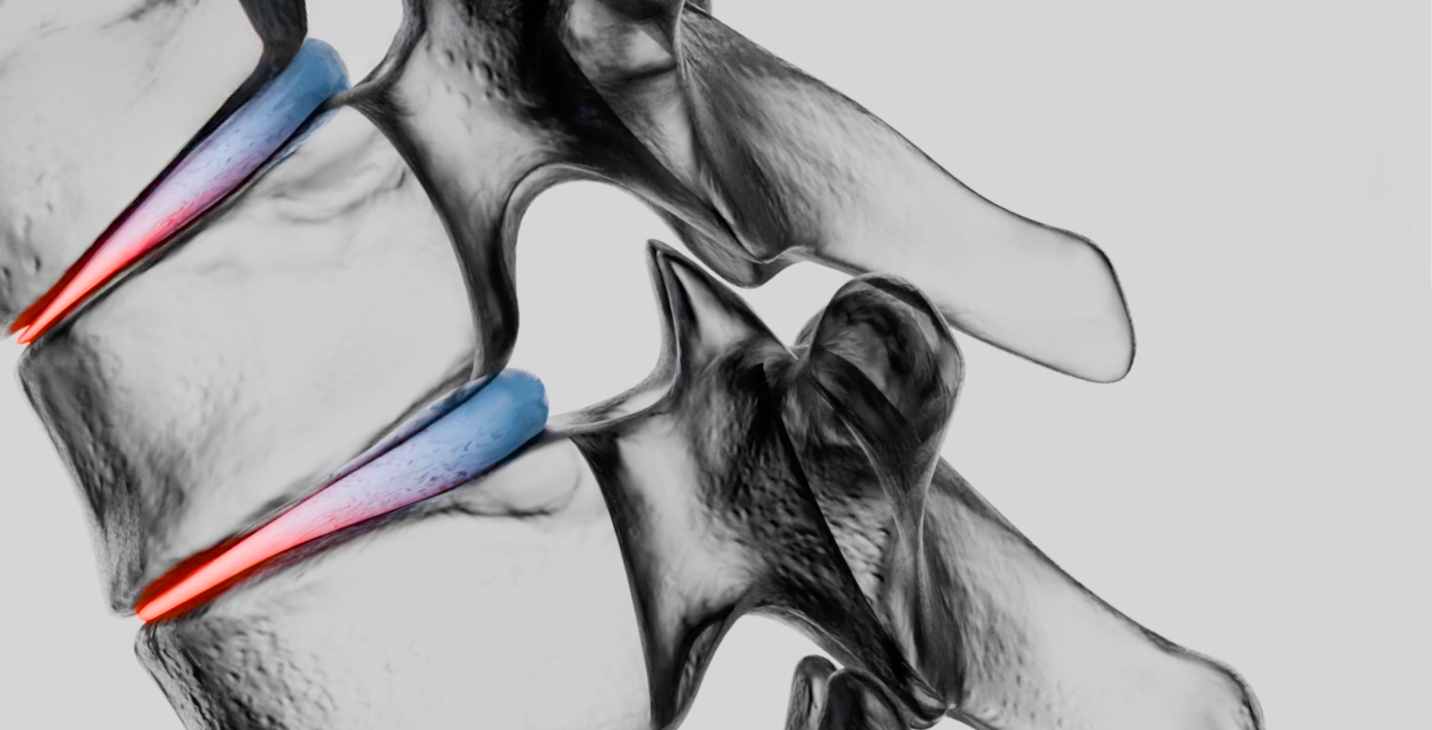
In laboratories, hospitals, and life sciences campuses worldwide, where accuracy is non-negotiable, discomfort isn’t merely physical—it’s a risk to performance and safety. Comfort is not a luxury; it’s the foundation of precision.
Researchers, clinicians, and technicians spend long hours at benches, microscopes, and computer screens—often in static or repetitive postures. Poor posture in these moments doesn’t just cause pain; it diminishes focus, accuracy, and long-term well-being. Over time, these habits contribute to fatigue and musculoskeletal disorders (MSDs), which account for nearly 30% of all workplace injuries worldwide.
The Evolving Science Workplace
The world of science and healthcare is changing fast. According to JLL’s Future of Work in Life Sciences report, 79% of global decision-makers in the sector say investing in quality spaces is now a greater priority than expanding footprints, and 74% see hybrid and flexible models as vital for talent attraction and retention.
Meanwhile, 85% of professionals believe artificial intelligence (AI) and automation will reshape laboratory design and management - freeing scientists to focus on higher-value analytical work.
This transformation calls for workspaces that adapt to people as much as to technology—where ergonomics, sustainability, and hygiene are integrated into design, not added later.
Designed for Demanding Environments
Every healthcare and life sciences environment presents unique physical and procedural challenges:
-
Laboratories: Hours of benchwork and pipetting require seating that supports active postures, mobility, and sustained comfort—while withstanding rigorous cleaning protocols.
-
Life Sciences Production: From research facilities to biomanufacturing lines, reducing fatigue is critical to maintaining precision and safety.
-
Healthcare: Clinicians move between patient care, charting, and collaboration. They need adaptable tools that enhance efficiency and endurance without compromising hygiene.
Global Perspectives: Comfort as Competitive Advantage
North America: With life sciences employment growing more than 11% year-over-year, ergonomic investment is becoming a differentiator. Labs and hospitals that champion comfort and well-being attract and retain top talent in an increasingly competitive field.
Europe: Driven by ESG frameworks and a strong culture of worker well-being, 72% of European life sciences leaders expect employees to demand workplaces with measurable environmental and health benefits
India: Rapidly expanding biotech and pharmaceutical hubs are adopting modular ergonomic systems to support diverse workforces and extend equipment life, aligning with sustainable manufacturing goals.
Singapore: A leader in workplace safety regulation, Singapore integrates ergonomics into its national productivity agenda. As real estate becomes denser, space-efficient comfort—ergonomics that fits seamlessly into compact labs and care environments—is increasingly valuable.
China: China’s expanding biotech clusters in Shanghai, Suzhou, and Shenzhen are pioneering new ergonomic standards. Roche’s Shanghai Diagnostics facility, for example, blends collaboration zones adjacent to laboratory spaces to enhance both efficiency and comfort.
The ROI of Comfort
The benefits of comfort go beyond well-being—they’re measurable business outcomes. Ergonomic programs can reduce injuries by 30–40% and boost productivity by up to 20%. JLL research shows that 67% of life sciences leaders now view workforce resilience as a strategic priority.
“Labs need the ‘wow factor’ in terms of location and amenities to stand out in the competitive talent market. When employees are satisfied with their work environment, their engagement is much stronger, and their productivity is likely to increase dramatically” - George Beaton, EMEA Life Science Research Lead, JLL.
When employees feel supported—physically and cognitively—they perform better, make fewer errors, and sustain focus longer. In the context of healthcare and research, that means better patient outcomes, higher data quality, and faster innovation cycles.
Recognizing this, Humanscale designs for the people behind the science—those whose work demands precision and whose comfort directly supports it.
Doing More with Less: The Humanscale Design Philosophy
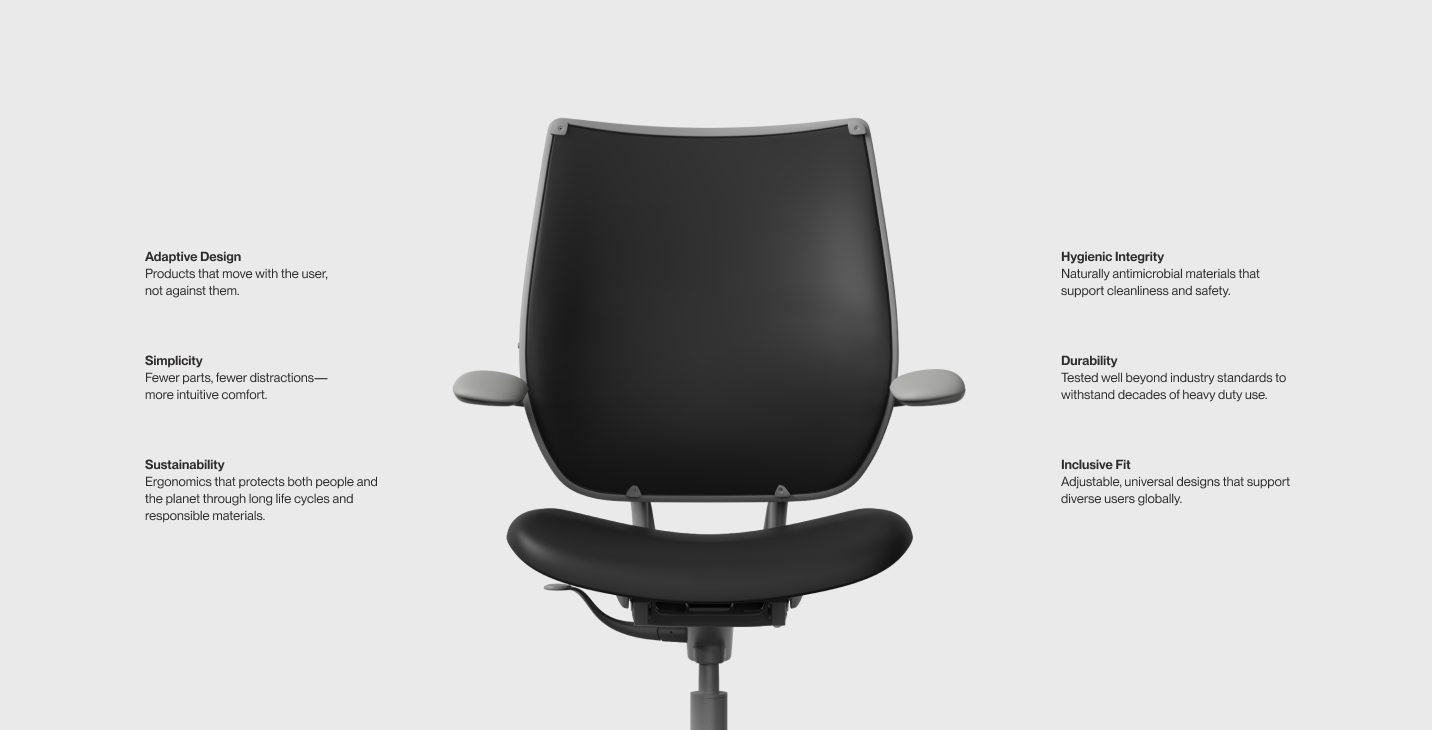
At the core of our design philosophy lies a principle that has guided the company for decades: doing more with less. It’s not simply a minimalist design approach—it’s a belief that great design should be both efficient and human-centered.
By reducing complexity and minimizing unnecessary components, we create products that use fewer parts, consume less material, and achieve more functionality. This results in tools that are lighter, more durable, and easier to maintain - critical advantages in healthcare and life sciences settings where reliability and hygiene are paramount.
This philosophy extends to material innovation. We prioritize naturally hygienic, non-porous materials that resist microbial growth and tolerate rigorous cleaning without degradation. By using finishes that do not require harsh chemical treatments, we reduce environmental impact while enhancing infection control and longevity.
Every product – from ergonomic chairs to monitor arms - is designed to perform quietly and intuitively, supporting focus and freedom of movement. In essence, Humanscale enables people to work comfortably and sustainably, even in the most demanding environments.
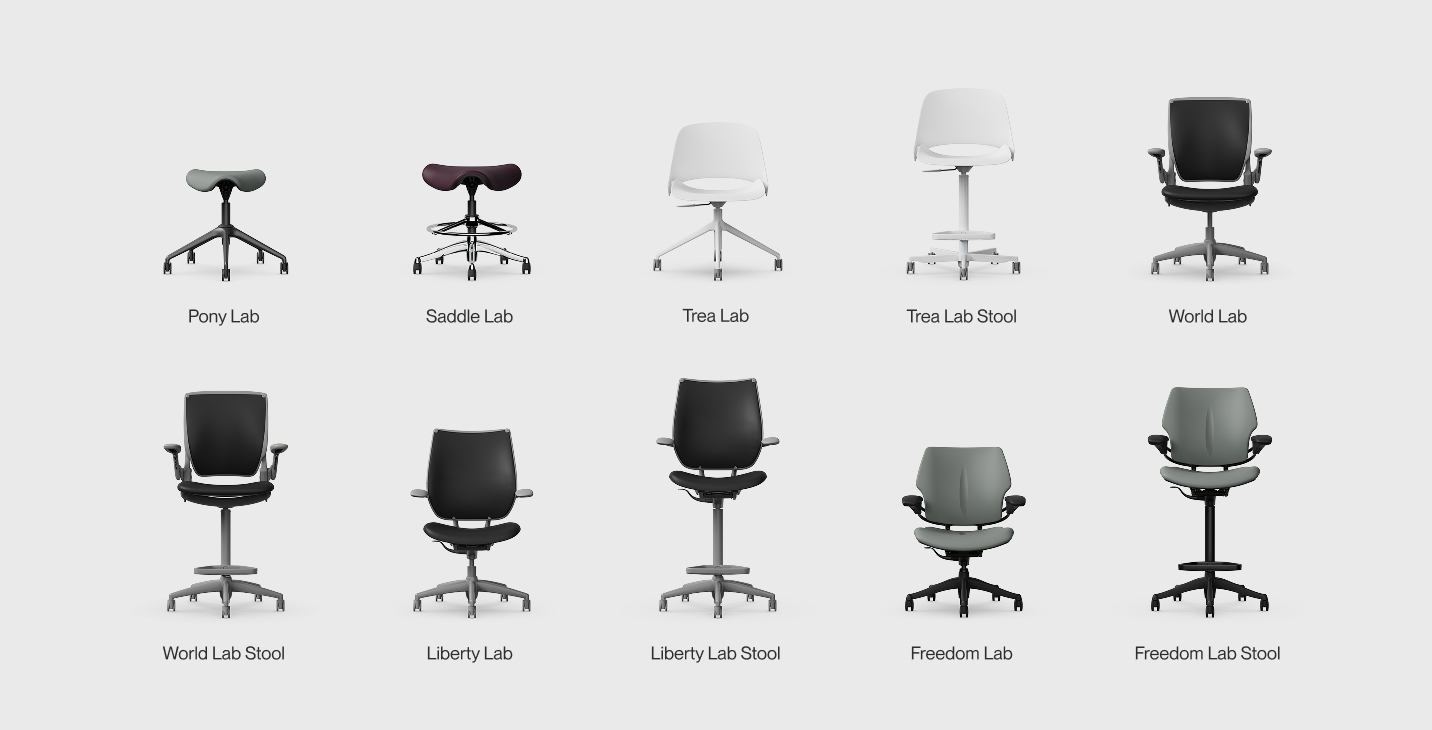
Humanscale’s ergonomic designs are purpose-built for these realities—laboratory chairs and stools that respond intuitively to movement, offer effortless adjustability, and use materials engineered for durability and cleanliness.
The Bottom Line
Science is inherently complex, but the environments that support it don’t have to be.
By uniting ergonomics, sustainability, and hygiene under a single design philosophy, Humanscale empowers researchers, clinicians, and innovators to perform at their best—comfortably, efficiently, and safely.
When comfort becomes effortless, science becomes limitless. Read more about our Lab & Healthcare Collection here.
.png)


