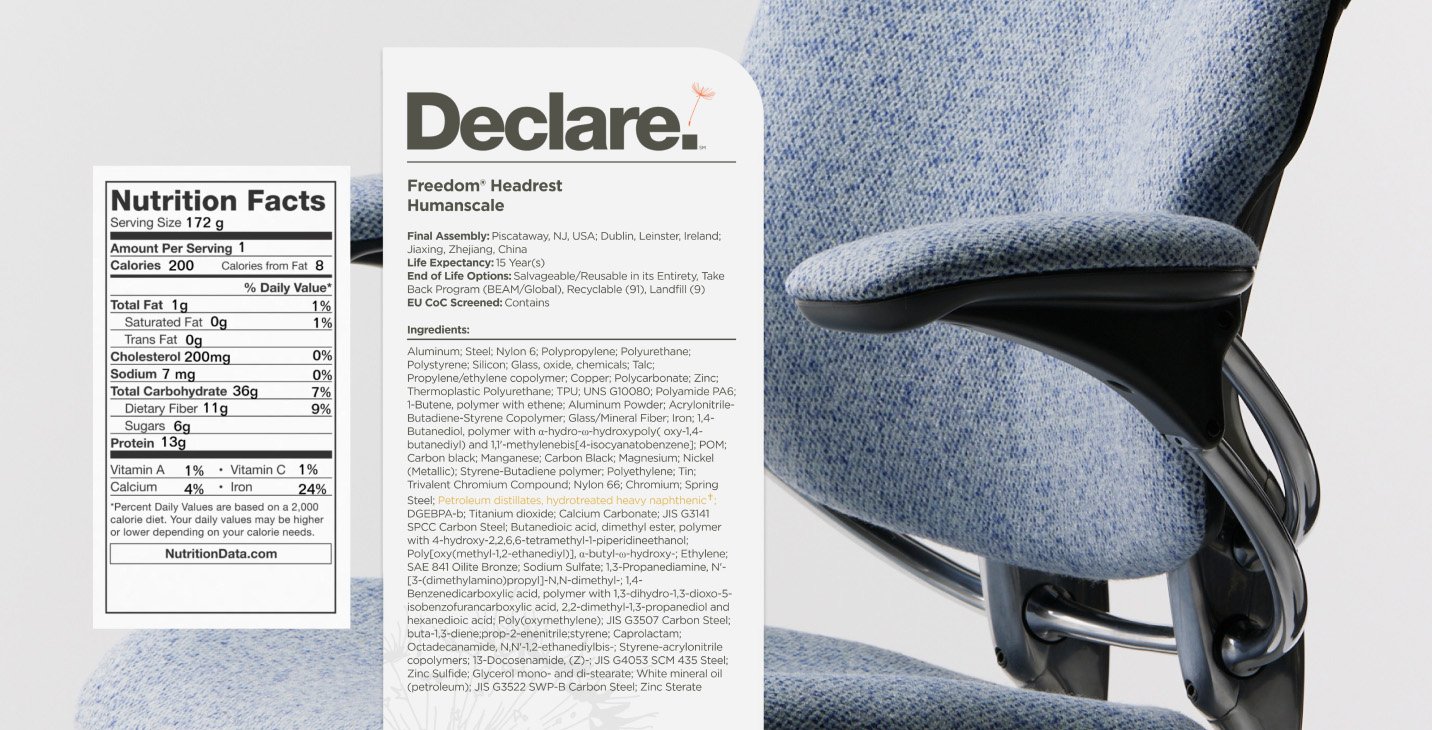
"We read every food label. Filter the water. Buy organic. But we sit in the same chair, all day, every day, and never once ask what it's made of."
It's a simple observation from Food Babe's recent newsletter, but it speaks to a much larger shift happening in the wellness world.
For years, wellness conversations have focused on what we consume: the food we eat, the water we drink, the products we put on our skin, and the cleaners we use in our homes. Consumers have become increasingly comfortable reading ingredient labels, questioning marketing claims, and demanding greater transparency from brands.
Now, that same mindset is beginning to extend to another category many people rarely consider: furniture.
As more people work from home and spend significant portions of their day indoors, questions about what surrounds us are becoming just as important as questions about what we consume. What is our office chair made of? What chemicals are used in our desk? How transparent are furniture manufacturers about the materials they use?
Food Babe's recent newsletter shines a spotlight on these questions, helping bring material transparency into the mainstream wellness conversation and encouraging readers to think differently about the products they interact with every day.

Why Furniture Materials Matter for Health
One reason Food Babe's perspective resonates is because she encourages people to ask better questions rather than simply accept products at face value.
As she writes:
"What they didn't mention: you breathe it. And you touch it."
Unlike packaged food or personal care products, furniture rarely comes with ingredient labels. Yet the average American spends about 90% of their time indoors, according to the U.S. Environmental Protection Agency (EPA), where furniture, flooring, paints, finishes, and textiles all contribute to the indoor environment.
While not every material presents the same level of concern, greater transparency helps consumers understand what they're bringing into the spaces where they spend the majority of their lives.
Some materials and chemicals consumers may encounter include:
PFAS, sometimes used in stain- and water-resistant coatings on textiles and upholstery. Often called "forever chemicals," certain PFAS have been linked to health concerns because they persist in the environment and can accumulate over time.
Formaldehyde, historically used in some engineered wood products and adhesives. It can off-gas into indoor air and is classified by the International Agency for Research on Cancer (IARC) as a human carcinogen.
PVC (polyvinyl chloride), a plastic commonly found in synthetic materials, edge banding, and some upholstery components. Its production and disposal have raised environmental and health concerns.
Added flame retardants, historically incorporated into furniture foams and textiles. Some have been associated with endocrine, developmental, and neurological concerns, leading many manufacturers to seek safer alternatives.
Antimicrobial treatments, which are often marketed as a cleanliness benefit but are increasingly viewed by many public health experts as unnecessary for most furniture applications because they can contribute to antimicrobial resistance.
Volatile Organic Compounds (VOCs), which can be emitted from adhesives, paints, finishes, foams, and composite wood products, potentially affecting indoor air quality.
The takeaway isn't that consumers need to memorize every chemical name. It's that transparency matters. When companies openly disclose what goes into their products, consumers are better equipped to make informed decisions about the spaces where they live and work.
For readers interested in learning more, our article What Do We Really Know About the Materials in Our Workspaces? explores how healthier materials contribute to better indoor environments and why transparency is becoming increasingly important across the furniture industry.
What Material Transparency Looks Like at Humanscale
In her newsletter, Food Babe highlights Humanscale as material transparency has been part of our company's philosophy for years.
In her newsletter, she notes:
"Humanscale was the first company in the furniture industry to publicly disclose what goes into their products. Every ingredient, listed openly."
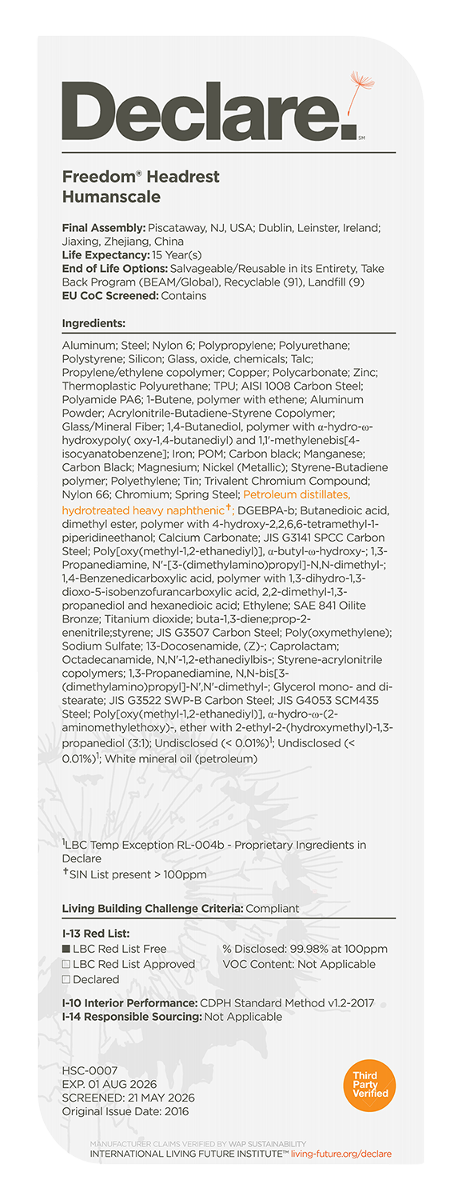
That commitment extends well beyond publishing ingredient disclosures.
We screen products against the Living Building Challenge Red List, work with suppliers to identify and replace chemicals of concern where possible, trace materials throughout its supply chain, and continually evaluate opportunities to improve the health profile of its products.
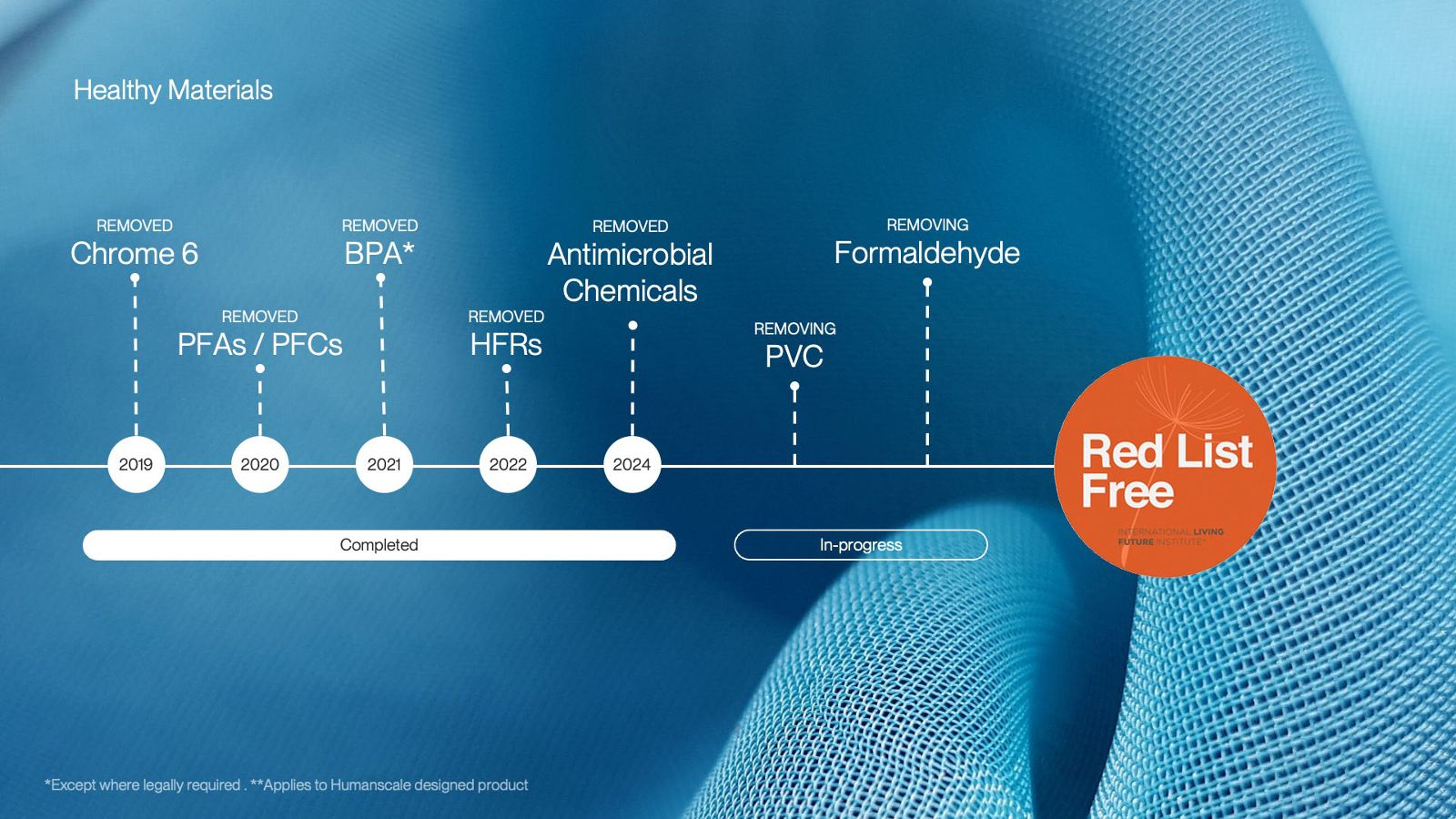
As Food Babe also points out, meaningful transparency requires more than knowing what's inside a product.
"They don't just clean up what they can see. Humanscale traces materials back through the entire supply chain until they have the full recipe for every component."
That level of accountability reflects a broader shift happening across industries, where consumers increasingly expect brands to be open about the products they make and the materials they use.
Healthy Materials Meet Ergonomic Design
Perhaps one of the most compelling parts of Food Babe's newsletter is that it doesn't stop at what's in a product. It also asks how that product supports your health every day.
After highlighting Humanscale's approach to material transparency, she writes:
"But maybe my favorite part? The chair's design."
She goes on to describe how the chair responds naturally to movement rather than relying on manual adjustments, noting that she notices "more movement, better circulation, and less pain over time."
It's an important reminder that wellness isn't just about reducing exposure to chemicals of concern. It's also about choosing products that actively support the body.
For people who spend hours sitting at a desk, ergonomics plays a meaningful role in overall wellbeing. A thoughtfully designed chair can encourage movement, support healthy posture, and reduce physical strain throughout the workday. When paired with healthier materials, it reflects a more holistic approach to wellness, one that considers both the environment around us and how we interact with it.
At Humanscale, we have long believed these two ideas belong together. Transparency about what a product is made from is one part of creating healthier spaces. Designing products that move with the body and support long-term comfort is another.
Bringing Ingredient Awareness Into the Home
Food Babe has spent years encouraging people to look beyond marketing claims and ask what's really inside the products they bring into their homes.
Furniture deserves the same level of curiosity.
You don't need to become an expert in material chemistry to make informed decisions. Instead, start with a few simple questions:
- What is this made of?
- Are the materials publicly disclosed?
- Has the product been designed to minimize chemicals of concern where possible?
- Was it built to last?
- Does it support both my health and my comfort?
As wellness continues to evolve, ingredient awareness is becoming material awareness. The more we understand about the products we use every day, the better equipped we are to create healthier homes, healthier workspaces, and healthier routines.
If you're interested in learning more about healthy materials, indoor air quality, and what to look for when choosing furniture, explore our article What Do We Really Know About the Materials in Our Workspaces?. It offers a deeper look at the role materials play in our everyday environments and the questions worth asking when making informed decisions.
Sources
U.S. Environmental Protection Agency. Indoor Air Quality (IAQ). https://www.epa.gov/indoor-air-quality-iaq
U.S. Environmental Protection Agency. The Inside Story: A Guide to Indoor Air Quality. https://www.epa.gov/indoor-air-quality-iaq/inside-story-guide-indoor-air-quality
International Agency for Research on Cancer (IARC). Formaldehyde. https://monographs.iarc.who.int/
National Academies of Sciences, Engineering, and Medicine. Guidance on PFAS Exposure and Health.