
Ergonomics Training
Humanscale offers certification programs, workshops, employee training courses and accredited CEU programs in ergonomics.
Certification Programs & Workshops
Certified Office Ergonomics Evaluator (COEE) Program
Ergonomics Program Development Workshop
Employee Training Programs
Office Ergonomics 101
Industrial Ergonomics 101
Laboratory Ergonomics 101
Post Move Ergonomics Training Program
CEU Programs for Facilities Managers & Designers
Designing Healthy Work Environments
Ergonomics and the Evolving Workplace
Certification Programs & Workshops

Ergonomics Certification Program
Developed by board certified ergonomists, Humanscale's two-day Certified Office Ergonomics Evaluator (COEE) Program provides participants with the skill set necessary to conduct comprehensive onsite or virtual ergonomic assessments for home or office-based employees.
Humanscale's certification program is offered in two formats - in person and virtual - each with live instructors. Group sizes are limited to 20 participants. Private in person or virtual training sessions are available for groups of 5 or more.
More Info
What will you learn?
On day one, you will learn how to identify and correct common postural problems and assess equipment challenges. Emphasis is placed on helping WFH or office-based employees achieve neutral postures through workstation adjustment and awareness training. Additional topics of discussion include basic human anatomy, common musculoskeletal disorders, and a review of current ergonomics research.
Day two focuses entirely on mastering the ergonomic assessment process. Each activity aims to build proficiency with each component of the process. You will learn techniques for delivering employee education, affecting behavioral change, evaluating equipment and handling objections. The course culminates with a mock workstation assessment where skills learned throughout the course can be applied.
COEE Exam
Upon completion of the course, the final step in the process is to complete an online certification exam, designed to evaluate several core competencies. The exam consists of two sections – multiple–choice questions and a mock workstation assessment. Those who achieve a passing score on the exam are awarded the designation 'Certified Office Ergonomics Evaluator (COEE).' Certificate holders are required to renew their certification every four years.
Who Should Attend?
- Facilities Managers
- EH&S Specialists
- Wellness Specialists
- Human Resources Professionals
- Risk Managers
- PT's, OT's and Chiropractors
- Architects & Designers
Professional Accreditations:
- America Occupational Therapy Association (AOTA) for 1.4 CEU's
- American Institute of Architects (AIA) for 14 LU's | HSW

Ergonomics Program Development Workshop
In this full-day hands-on workshop, participants will learn how to develop and implement a comprehensive corporate ergonomics program aimed at reducing risk of injury, improving worker health, and lowering costs. Using Humanscale's six-step framework, attendees are guided through the process of defining measurable program goals, assigning stakeholder responsibilities, evaluating areas of concern and quantifying results.
More Info
What will you learn?
- Establishing program goals and objectives
- Engaging proper stakeholders
- Developing in-house expertise and cross-functional teams
- Evaluating areas of concern and implementing change
- Implementing effective training programs
- Linking your ergonomics program to other organizational initiatives
Who Should Attend?
- HR Professionals
- Risk Managers
- EH&S Specialists
- Facility Managers
- Ergonomists
- Wellness Specialists
Employee Training Programs
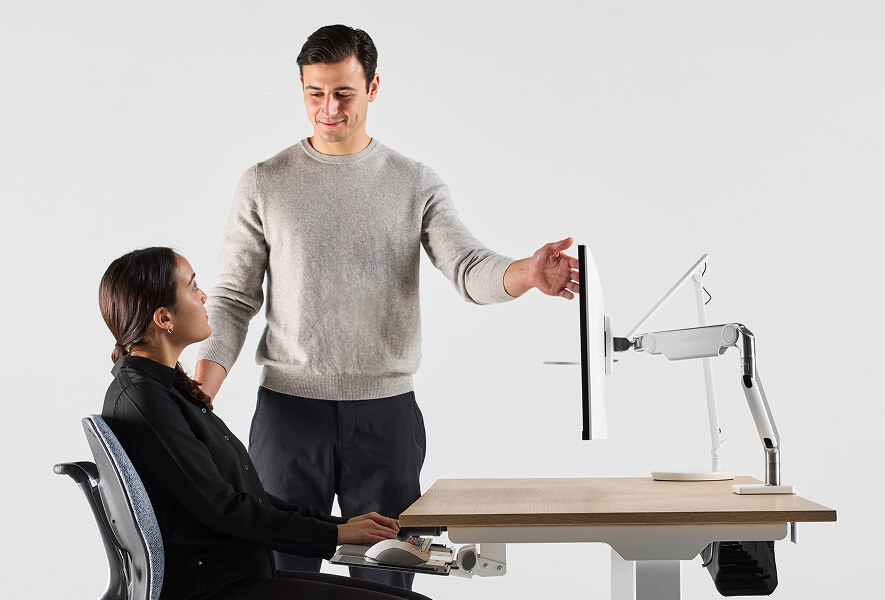
Office Ergonomics 101
Ergonomics 101 is an interactive one-hour training program aimed at increasing employee awareness of ergonomics. This program trains employees on key ergonomic concepts and shows how to properly configure a workstation for optimal health, comfort, and performance. Attendees learn how to correctly adjust their task chair and position their keyboard and mouse to minimize the risk of developing discomfort. Ergonomics 101 also discusses guidelines for proper monitor and document placement.
More Info
What will you learn?
- Dispel commonly held misconceptions
- Understand the long-term implications of a poor workstation setup
- Identify awkward postures and learn how to achieve neutral postures
- Elevate awareness of key ergonomic concepts and adjustment guidelines
- Learn how to configure any workstation for optimal health and comfort properly
Who Should Attend?
Everyone — this course is the ideal introduction to workplace ergonomics guiding attendees through the ergonomic considerations in their workstation set-ups and how to minimise risk of discomfort.
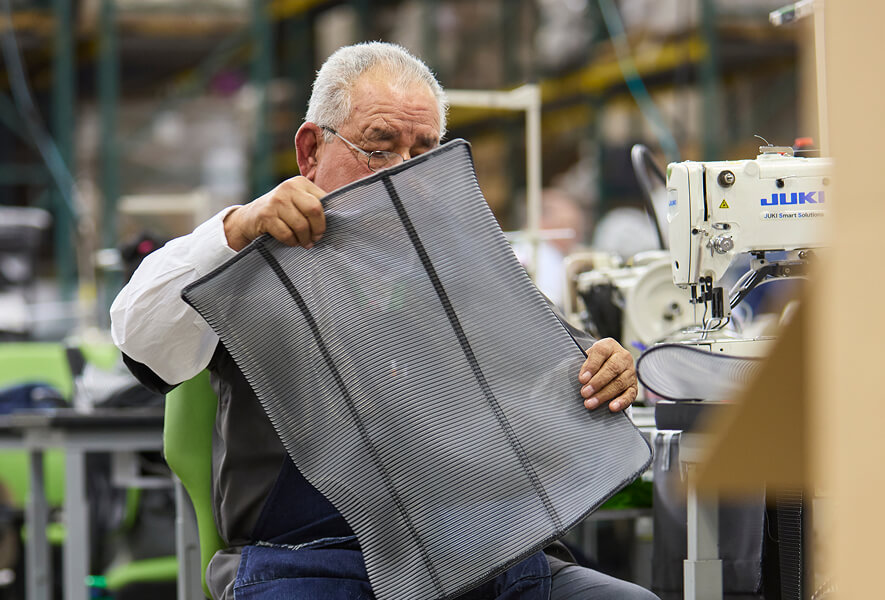
Industrial Ergonomics 101
Industrial Ergonomics 101 is a one-hour course is designed to help employees working in manufacturing, warehousing, and industrial environments identify and mitigate ergonomic risks. The course provides practical strategies for improving posture and reducing injury risks. Key areas include safe material handling, ergonomic workstation design, risk reduction for tasks involving repetitive motion, and guidelines for environmental conditions such as vibration and temperature. Through real-world applications and pre/post-intervention examples, participants gain actionable insights for reducing strain, preventing injury, and improving overall comfort and performance.
More Info
Learning Objective
- Learn to identify and mitigate common injury risk factors in industrial settings
- Understand the impact of posture, repetition, force, and vibration on the body
- Optimize workstation setup using anthropometric data and task-specific guidelines
- Apply safe manual material handling principles, including lifting techniques
- Select and use hand tools based on ergonomic design criteria
- Recognize and reduce the effects of environmental conditions on physical stress
Who Should Attend?
All employees working in manufacturing, warehousing, and industrial environments.

Laboratory Ergonomics 101
Tailored for lab professionals, this one-hour course addresses the unique ergonomic challenges associated with prolonged laboratory work, including the use of microscopes, micropipettes, fume hoods, and biosafety cabinets. Participants will learn how to optimize their posture and adjust workstation components to reduce strain and discomfort while working. The course provides an overview of risk factors, injury types, tool selection guidance, workstation configuration, and strategies for improving overall work posture.

Post Move Ergonomics Training Session
Many organizations invest substantial resources in ergonomic work tools to enhance employee comfort and to reduce risk of injury, yet few organizations train their employees on how to use the tools properly. Regardless of how easily the equipment may adjust, proper utilization is not a given, particularly when employees lack basic knowledge of ergonomic guidelines and concepts. Some work tools require users to make fundamental changes to their working posture, which often requires significant behavioral change. In practice, these changes do not occur through installation alone.
Humanscale's Post Move Ergonomics Training Program combines ergonomics training with individualized workstation fittings to help employees configure their workstations for optimal health and comfort.
More Info
Ergonomics Training
Training sessions can be informal gather rounds held in the work environment or more formal conference room style sessions depending on preference. Participants are shown how to configure their work environments for optimal health, comfort, and performance. Training sessions elevate awareness of ergonomic concepts, principles, and adjustment guidelines.
Workstation Fittings
Following each training session, one-on-one workstation fittings are facilitated by our team of ergonomists to further assist employees with proper workstation configuration, postural improvement, and risk reduction. If well organized, we can typically train and configure approximately 100 employee workstations per day per ergonomist.
What's included?
- Up to 4 training sessions per day facilitated by an ergonomist
- Individual workstation fittings for each employee
- Expert guidance on proper workstation configuration specific to the employee's unique body dimensions and job tasks
- Guidance on postural improvement and behavioral modification
- Diagnosis of any potential equipment related problems
- Humanscale's Healthy Workstation Guidelines tip sheet
Expected Health & Performance Benefits
- Reduced risk of discomfort, pain, and injury
- Improved overall body posture
- Enhanced efficiency and work performance
- Improved understanding of ergonomics and proper workstation setup
Accredited CEU Courses for Architects & Designers
The following programs are accredited for continuing education units (CEUs).
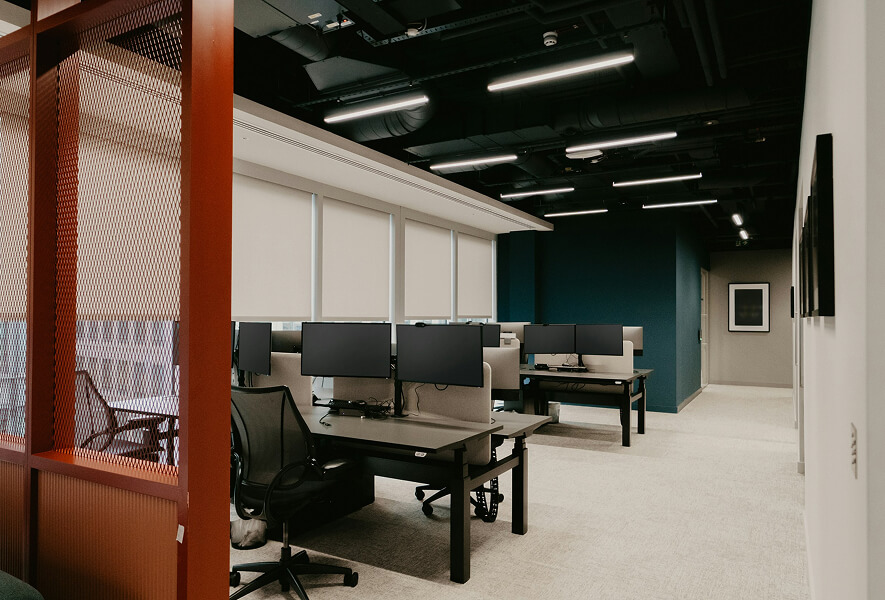
Designing Healthy Work Environments
Advances in computing technology are testing the limits of the human body, making it increasingly more challenging to design for long term comfort and health. This stakeholder level educational program elevates awareness of how to avoid common pitfalls when designing for the modern office.
More Info
What's included?
This course provides an overview of common musculoskeletal problems facing today's computer users while discussing key research developments in areas of seating, input devices design, sit/stand products, display technology, and lighting. Attendees learn how ergonomic principles are being applied to the design of computer workstations to reduce employee discomfort and risk of injury while lowering employer costs.
Expected Health & Performance Benefits
- Facilities Managers
- HR Professionals
- Risk Managers
- Architects & Designers
- EH&S Specialists
- Wellness Specialists
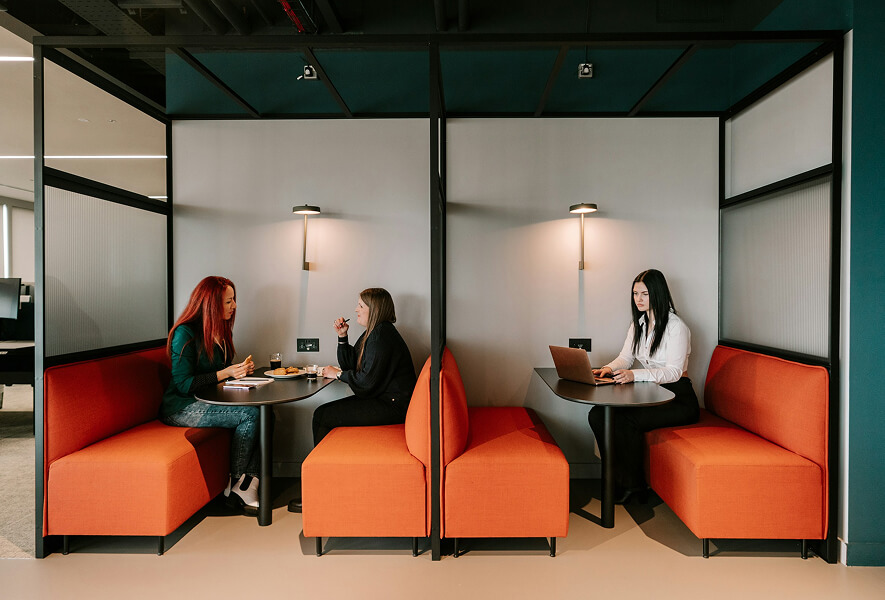
Ergonomics & the Evolving Workplace
Work as we once knew it continues to evolve. Hybrid working models that balance home and traditional office work appear to have staying power, however, the tug of war between employees and executive leadership over the number of in-office days continues to persist. This one-hour talk will examine several root causes of this dichotomy and argue that at least some of the hesitancy among employees to return to traditional offices is related to the evolving nature of tasks and the inadequacy of current workplace design.
The course is accredited with the IDCEC (.1) and AIA (1).
More Info
What's included?
- Gain insight on post-pandemic musculoskeletal health indicators
- Understand the underlying causes of RTW hesitancy through a lens of task efficiency and workplace design
- Understand the limitations of the 'open office' concept
- Explore the design implications of evolving work models from an ergonomics perspective
Expected Health & Performance Benefits
- Facility Managers
- HR Professionals
- Risk Managers
- Ergonomists
- Architects & Designers
- Wellness Specialists
Request More Information
To learn more please submit the form below.

